 
Jasia
Member
Username: Jasia
Post Number: 4
Registered: 09-2006
| | Posted on Tuesday, September 19, 2006 - 2:34 pm: |    |
Thanks everyone for sharing your stories, photos and maps! I'm learning a lot :-)
I have a couple questions... On the Sanborn map of St. Francis, does anyone know what building was on the SE corner of Campbell and Buchanan? It looks like it says "vend" but I can't make it out clearly. Also, I understand that Chene Street was the "heart" of the east side Polish community but was there a west side equivalent? Maybe Michigan Ave or Warren? |
Livedog2
Member
Username: Livedog2
Post Number: 1195
Registered: 03-2006
| | Posted on Tuesday, September 19, 2006 - 4:59 pm: | |
Jasia, I think that Junction was the center of activity for the Westside Polonia because the institutions of the Westside Polonia were on Junction. Places like St. Hedwig’s, the Westside Dom Polski, Holy Redeemer, Polish Falcons Hall, Nest #79, the Polish Reading Room Club, Kudronia Hall, etc.
Jasia you said,
quote:On the Sanborn map of St. Francis, does anyone know what building was on the SE corner of Campbell and Buchanan? It looks like it says "vend" but I can't make it out clearly.
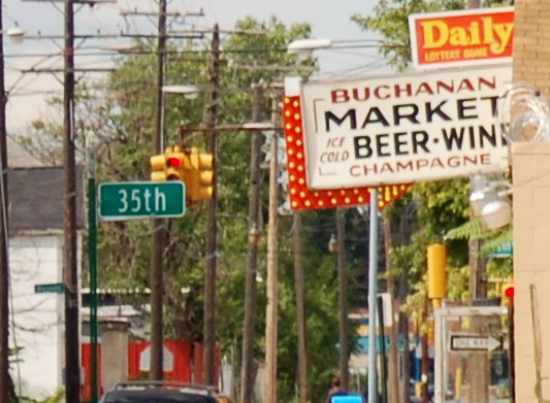
I can't speak for the Sanborn map but I pulled out one of my photos of that intersection and zoomed in on the intersection. You can see 35th street which is one street, I believe, south of Campbell. And, the street running along the front of the Buchanan Market is obviously Buchanan. So, the white building just to the left of the street sign beyond 35th which you can't make out very well is the building you are wondering about. I'll look a little closer and see what else I have because it seems to me I stuck my head in there and caught 3 black guys smoking crack. Maybe I took a picture and maybe I didn't but I'll look.
Livedog2 |
D2dyeah
Member
Username: D2dyeah
Post Number: 18
Registered: 09-2005
| | Posted on Tuesday, September 19, 2006 - 6:02 pm: | |
I called my mother today in West Dearborn and she said that the Michigan and Junction shopping area stores were mostly polished owned, even though the names were "Generic". She said Fays Dress shop on Michigan ave. next to Cunninghams was owned by a polish family, as well as a childrens clothing/toy store on Junction across the alley next to Cunninghams called Kipticks. A Store owner on Michigan, a shoe store my mom can't recall the name of, were friends of my Grandpas. They were pigeon racers and belonged to the same club. He used to fit my mom and her brothers and sisters for shoes. |
Jasia
Member
Username: Jasia
Post Number: 5
Registered: 09-2006
| | Posted on Tuesday, September 19, 2006 - 7:13 pm: | |
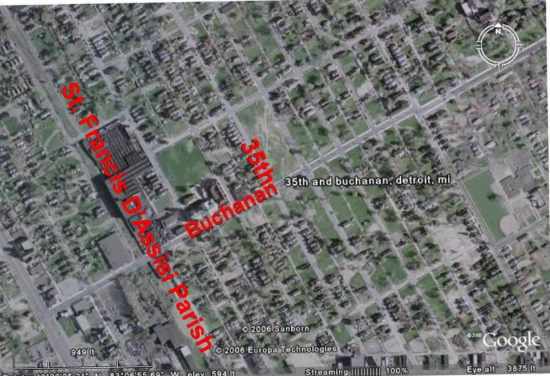
Oh LiveDog! Thank you so much for the photo!!! My grandparents lived on 35th street, one house south of Buchanan. I think I was told there was a gas station next door to the house. That would have been on the SW corner of the 35th and Buchanan intersection. I don't suppose when your photo is zoomed out it would show the intersection or maybe their house would it? What year was the picture taken? My grandparents died before I was born and the house was torn/burned? down before I ever got a chance to see it. Oh, and do you know what business was on the SE corner of 35th and Buchanan (would have been across the street from their house)? Thank you for all your help! |
Hornwrecker
Member
Username: Hornwrecker
Post Number: 1622
Registered: 04-2005
| | Posted on Tuesday, September 19, 2006 - 8:46 pm: | |
I have no idea what that vend means. I went back to look at the "original", and it looks like it is ven'd, which means even less to me (vendor, ventilated,...?). Sometimes things are better left unknown.
Here's a link to a list of parks/picnic grounds that were popular summer escapes for the Poles of Detroit. (There was a thread about it, but I forgot what it was titled. Dog?)
http://shelbyhistory.tripod.co m/id32.html
The Green Glen was the one owned by the Polish Falcons, which I remember going to when I was young. |
Livedog2
Member
Username: Livedog2
Post Number: 1197
Registered: 03-2006
| | Posted on Tuesday, September 19, 2006 - 8:55 pm: | |
Here's a current Google Sanborn map of 35th and Buchanan. That intersection you mentioned is as slick as a baby's behind. I don't think my photos go back far enough to have gotten a photo of your grandparent's house. There are still some "old timers" in the neighborhood, maybe you could go to the old neighborhood and knock on some doors. You never know if you might run into somebody that lives there that just might say, "Yah, I knew your grandparents and I have a picture of their house and them, too!" Another thing you could do is go to one of the masses at St. Francis D'Assisi and after mass talk to some folks and see if you might come up with some info and maybe even a photo. Just remember that the asking is the fun part and if you get something then that's a bonus. Good luck!
Livedog2 |
Livedog2
Member
Username: Livedog2
Post Number: 1198
Registered: 03-2006
| | Posted on Tuesday, September 19, 2006 - 9:43 pm: | |
More St. Francis D'Assisi Polish Roman Catholic Church photos.
The elevated pedistrian bridge from the grade scool to the high school.
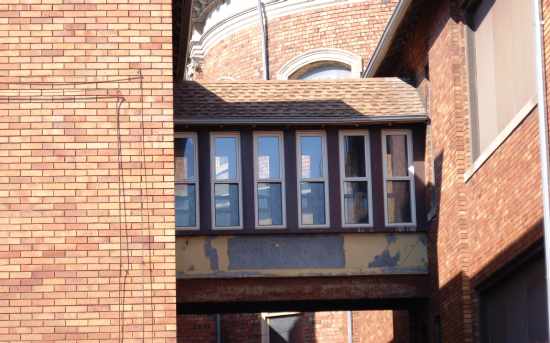
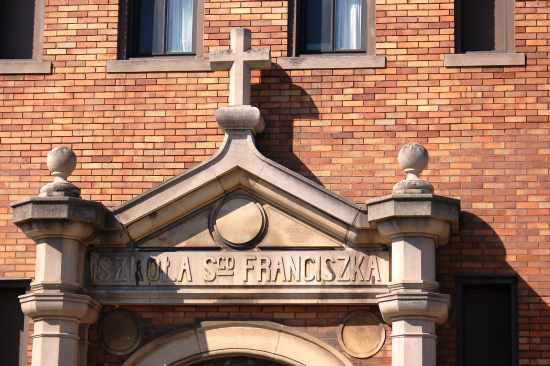
Grade school entrance.
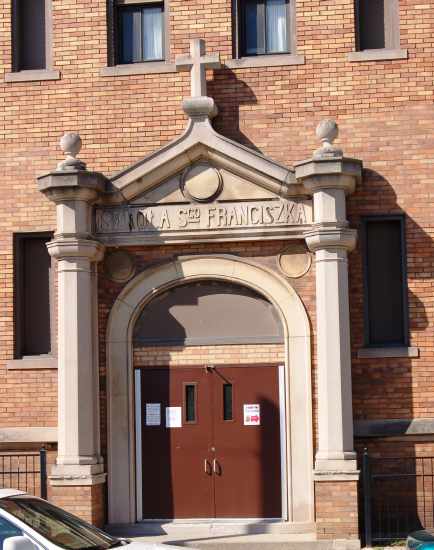
Grade school entrance close up.
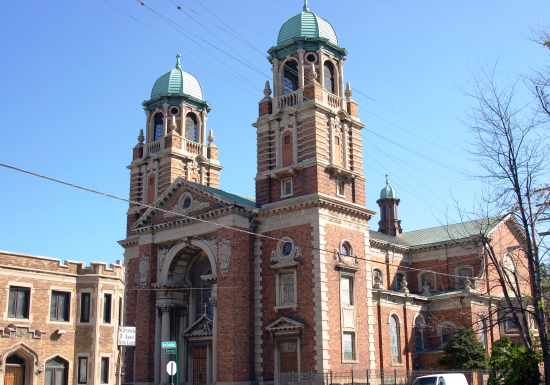
The front of St. Francis D'Assisi Parish. What east side church does this look like?
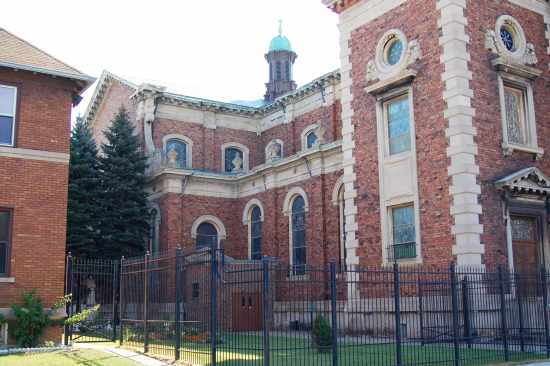
Court yard between the church and the rectory.
Livedog2 |
Raggedclaws
Member
Username: Raggedclaws
Post Number: 10
Registered: 08-2006
| | Posted on Tuesday, September 19, 2006 - 10:02 pm: | |
My apologies if this has already been mentioned, it is a great read:
Horn Man: The Polish-American Musician in Twentieth-Century Detroit by Laurie Gomulka Palazzolo
http://wsupress.wayne.edu/glb/ detroit/palazzolohm.htm |
Hornwrecker
Member
Username: Hornwrecker
Post Number: 1624
Registered: 04-2005
| | Posted on Tuesday, September 19, 2006 - 10:09 pm: | |
No, it hasn't been mentioned, but I keep running into that book on my web searches. I'll have to put it on my library request list.
Link to National Register of Historic Bldgs in Wayne County, a few of the churches are listed here.
http://www.nationalregisterofh istoricplaces.com/mi/Wayne/sta te6.html
More info on Kastler:
http://www.kastler.net/chronicles/sthedwig.php
(Message edited by Hornwrecker on September 19, 2006) |
Livedog2
Member
Username: Livedog2
Post Number: 1199
Registered: 03-2006
| | Posted on Tuesday, September 19, 2006 - 11:29 pm: | |
One of the most beautiful love songs in any language, anytime or anywhere is this Polish love song entitled: To Nie Ptak meaning She's Not A Bird
The English translation is something like this:
She's hustling in a colorful dress
From time to time turning her head
And smiles
You could swear
That you saw her wings yesterday
When she was trying to hide them
Under the dress
But she
She's not a bird
Can't you see
It she's not a bird
She's not a bird
It's not a bird
Can't you see
With her every move she tells you she loves you
But you are looking for the feather in a colorful lace
Because you're sure
You saw the shade of the wings
And that's why you built a cage
But she
This day
When the darkness will steal your heart
She will be in the window laughing through tears
With flowing hair
And turned into raven jump
Only to come back to here
But as Bird of paradise
Because you wanted this
As a bird of paradise
As a bird of paradise
Because you wanted this
The actual song is so melodious and mellifluous that it will mesmerize you. If anyone would like me to send them a copy of the actual song just post your email and I'll send the song to you.
Livedog2 |
Livedog2
Member
Username: Livedog2
Post Number: 1200
Registered: 03-2006
| | Posted on Wednesday, September 20, 2006 - 5:28 pm: | |
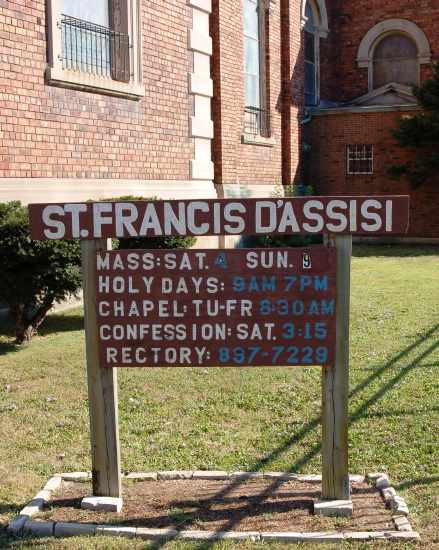
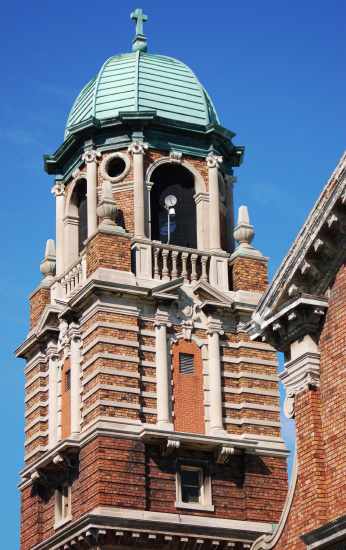
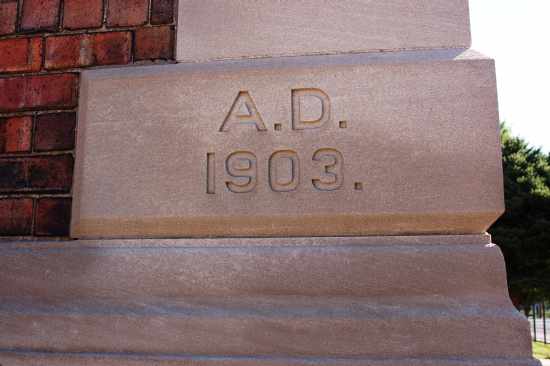
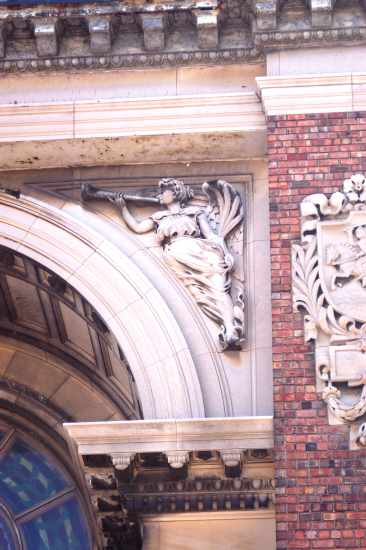
Still more St. Francis D'Assisi Polish Roman Catholic Church located on Wesson and Buchanan on the west side of Detroit.
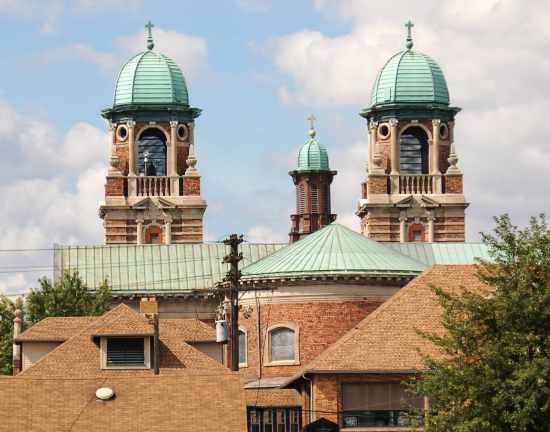
Rear view of the church spires.
Mass schedule.
Detail of the top of one of the church spires.
Cornerstone with date.
Detail of Gabriel the Angel at the front entrance.
Detail of mid-point of one of the spires.
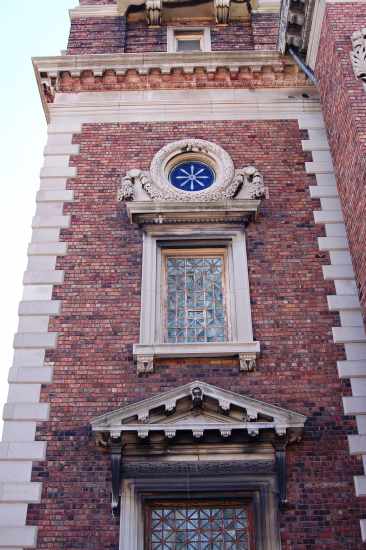
Livedog2 |
Hornwrecker
Member
Username: Hornwrecker
Post Number: 1627
Registered: 04-2005
| | Posted on Wednesday, September 20, 2006 - 9:21 pm: | |
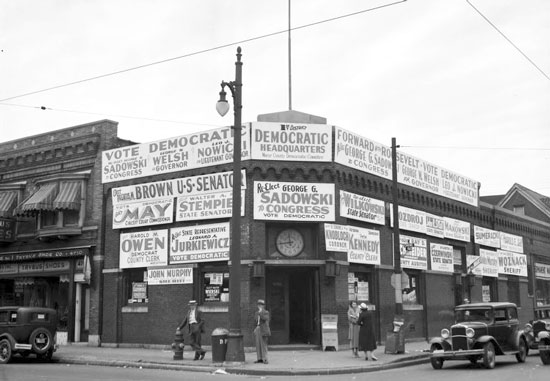
A photo from WSU showing Democratic HQ at Chene and Forest, looks like the early 1930s. The store next door is named Trybus Shoes.
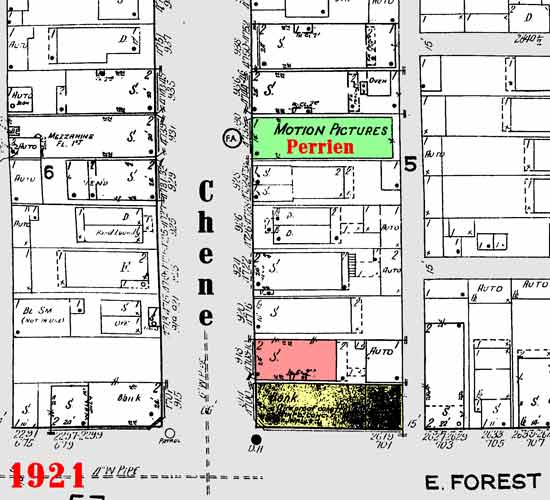
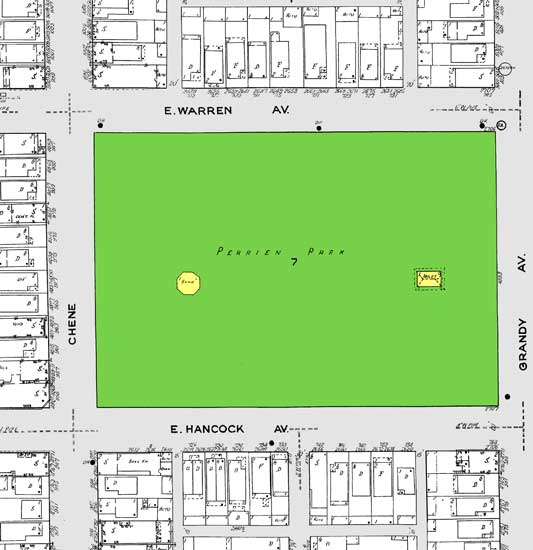
The 1921 Sanborn map shows that this building was originally a bank. The Perrien (or Perrein) Theatre (named after the park) is in green, Trybus Shoes in red, and the bank in yellow. There was another bank across the street.
If anyone wants to research any of the names on those campaign signs, try:
http://politicalgraveyard.com/index.html
(Looking at maps and other sources, I can't get an agreement on if it is spelled Perrein, or Perrien, or maybe the spelling evolved, as is sometimes the case.)
(Message edited by Hornwrecker on September 20, 2006) |
Livedog2
Member
Username: Livedog2
Post Number: 1201
Registered: 03-2006
| | Posted on Wednesday, September 20, 2006 - 11:51 pm: | |
I believe the name of the park is Perrien Park according to all of the information I have read and it's just logical but maybe someone else has better information than mine. At any rate Perrien Park played a big part in the social, recreational, religious and fraternal lives of the early Polish residents. Here is a little depression era story that included Perrien Park as a prominent venue for this important activity of the day.
quote:“By 1933 Detroit was the focal point of 70 per cent of the unemployment that gripped the state. One-third of the wage earners of Michigan had been partly or totally unemployed for four years in succession. When the depression was only two years old, the army of 211,000 dependents on Detroit’s relief rolls was equal in size to the entire population of Grand Rapids.
“An additional 150,000 persons had fled Detroit ...” leading to the infamous Ford Hunger March. *** Although the meat protest started in the small city of Hamtramck, Zuk’s protest gained national attention immediately. Since the movement touched a massive sensitive cord, e.g., the high meat price, the bandwagon began to roll downhill with reverberations felt around the Nation. Out of the blue on July 27, 1935, “Buyers Trampled by Meat Strikers” reported the New York Times, proof of the national impact. Over 500 militant female pickets were led by Mary Zuk of the “Committee for Action Against the High Cost of Living.” Hamtramck Mayor Joseph A. Lewandowski first charged “some Communists appear to be participating,” but he later conceded, “The big majority are good honest citizens with a legitimate complaint against exorbitant meat prices.”
Zuk protested, “Maybe Roosevelt started it by killing the little pigs and the cattle. We don’t know and we don’t care. We aren’t going to pay such high prices for meat and that’s all there is to it.” Hamtramck’s butchers estimated that the strike proved 95 per cent effective resulting in meatless dinners.
“Agriculture Adjustment Administration (AAA) processing taxes on pork were blamed by Detroit packers for Saturday’s turbulent meat strike which Hamtramck butchers said cost them thousands of dollars.” Mrs. Mary Zuk stated that the strike would resume unless prices were reduced 20 per cent. More than 100 housewives in Lincoln Park prepared to protest.
The ultra-liberal Polish Trybuna Robotnicza (The Worker’s Tribune), which followed the custom of the day by featuring an “Extra.” Because the older, extremely conservative Dziennik Polski (The Polish Daily), established in 1904, favored the butchers over the strikers, whom they labeled as Communists, the Tribune referred to their opponents as the Dziennik Niepolski (The Un-Polish or literally not Polish Daily).
The following Trybuna Robotnicza ran an eight column bold banner headline, STRAJK MIESNY W DETROIT 3 SIERPNIA (Meat Strike in Detroit August 3) with a photograph claiming that 1,200 women attended the meat strike meeting on July 26th at Copernicus School in Hamtramck. A similar meeting took placed at the west side Detroit Dom Polski (Polish Home) on Junction the day before and a rally occurred at Perrien Park, located on Chene St., south of Warren at Hancock on August 1st. The paper lauded the picketing of July 27, 1935 by Hamtramck women as the start of the historic first battle for meat price reduction.
Mrs. Mary Zuk announced that the movement was the start of a “general strike against the high cost of living.” Denying that the strike was communistic, she asserted that the charge “is part of a ruse on the part of the butchers and meat packers to frighten timid people and split the ranks.” From: Hamtramck History
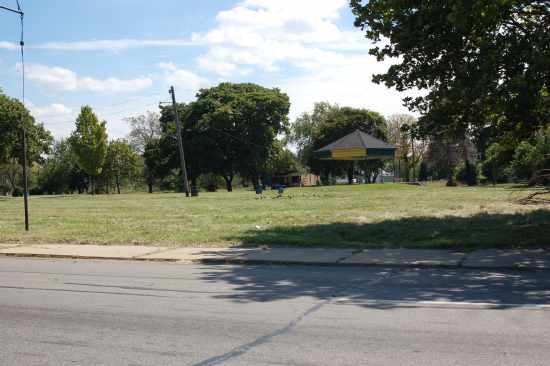
Various photos of Perrien Park, the gazebo and the playground in the park.
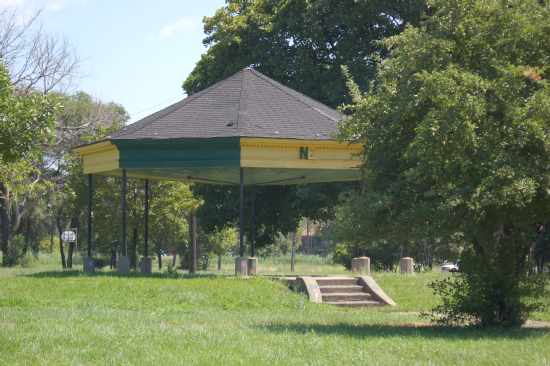
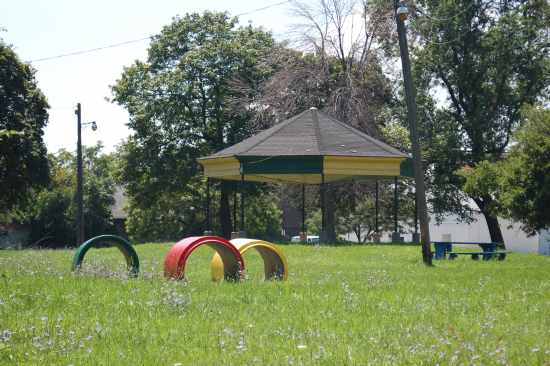
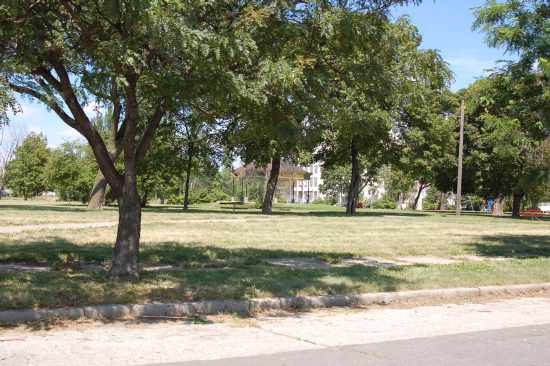
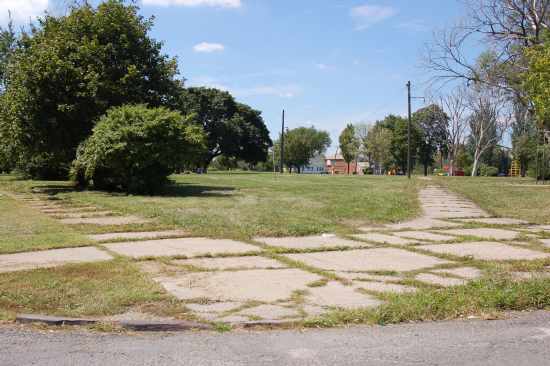
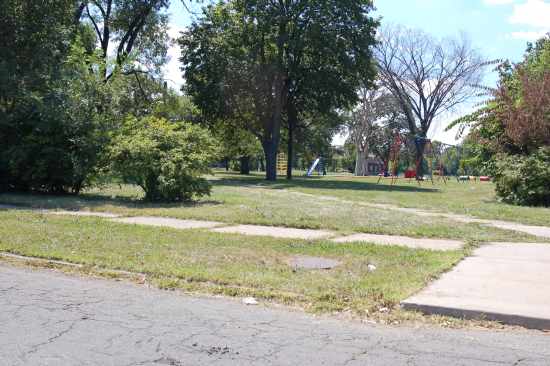
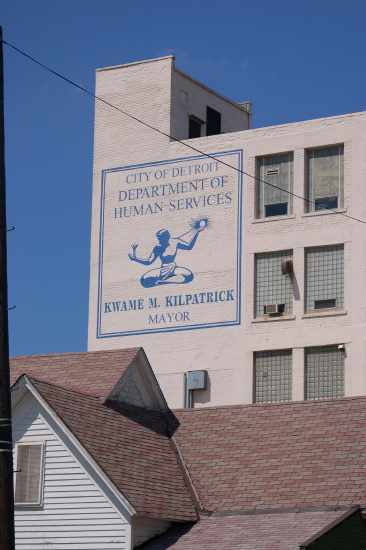
Kwame sign overlooking Perrien Park at the NW corner of Warren and Grandy.
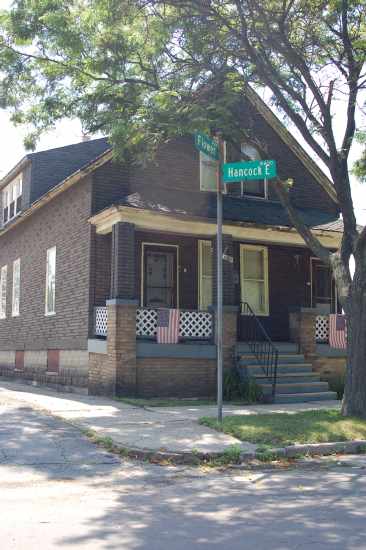
At house just acroos Hancock St. from Perrien Park with a house full of Polish people hanging on in their neighborhood. I talked with them and they said they've been there for over 50 years!
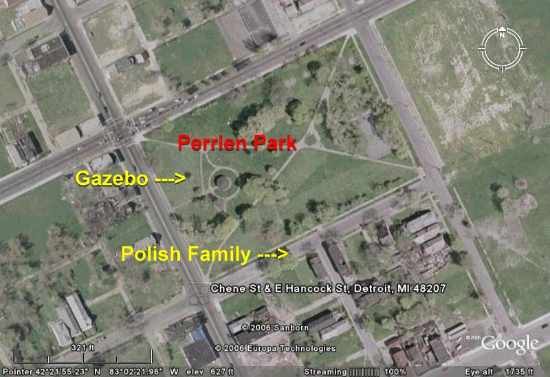
Current Google Sanborn map of Perrien Park, the gazebo in the park and the location of the Polish family across the street from the park.
Livedog2 |
Livedog2
Member
Username: Livedog2
Post Number: 1204
Registered: 03-2006
| | Posted on Thursday, September 21, 2006 - 12:02 pm: | |
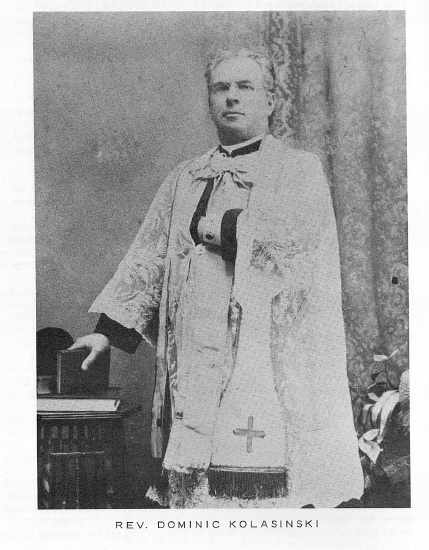
Rev. Dominic H. Kolasinski the pastor and builder of St. Abertus and Sweetest Heart of Mary Polish Roman Catholic Churches was certainly the most important or at least controversial catholic priests in the Polish Community if not the entire City of Detroit. As such he deserves to have his story told in its entirety on this thread because this story can only be found in a book that has been out of print for over 33 years. It is a long story so I will post in in two (2) parts because of the limitations on how much can included in any one post.
Part 1
quote:A Priest Conscious of His Charms
Today few Detroiters and not many parishioners of St. Albertus congregation know anything about Rev. Dominic Kolasinski. But in the 1880's and 1890's, aside from Bishops Caspar Borgess and John Foley, no local Catholic priest was more familiar to readers of Detroit newspapers. In The Evening News alone (according to Eduard A. Skendzel's unpublished exhaustive bibliography), Fr. Kolasinski appeared in almost 400 separate notices and articles. Seated in his "splendid turnout" with its "liveried coachman and a pair of creams," he was the cynosure of all eyes as he rode along Detroit streets on business or for recreation.
The flamboyant, contentious and turbulent life of Fr. Kolasinski in Detroit had its beginnings in Austrian-Poland. He was born August 13, 1838 (if not possibly 1836), in the southwestern Galician town of Mielec. The oldest of four sons of an organist, he studied for the priesthood and was ordained August 14 (not July 25), 1864, at the age of twenty-six in Krakow by Bishop Antoni Galecki. Then for eighteen years, he moved from one parochial post to another, until he was assigned in 1875 to Czernichow, a town of about 1,000 inhabitants near Krakow.
At forty-four, when most priests were firmly settled in their pastoral appointments, Fr. Kolasinski left the Diocese of Krakow. He came to Detroit partly at the instance of Joseph Przybylowski, a St. Albertus parishioner, who wrote him about the parish, but chiefly at Bishop Caspar Borgess' prior invitation of August II, 1881, assuring him of a pastoral ministry in the diocese. The bishop acted on the basis of documents submitted both by Fr. Kolasinski and the Krakow chancery, testifying to the good character and conduct of the priest. Upon his arrival March 30, 1882, he was formally adopted into the priestly group of the Detroit Diocese and appointed pastor of St. Albertus Parish in place of the one-armed Rev. John Wollowski.
Fr. Kolasinski was then in the prime of life and gave eye-catching evidence of it. A reporter of The Evening News described him as "the polished gentleman. His full ruddy features are well rounded. His hair of light auburn tinge rises from a forehead in curls. His light gray eyes are quick and active, and his lips seeming ever ready to part in a smile which breaks into dimples on either cheek. Brumel would stop to admire his splendid white teeth. His manner is hardy and
vigorous like his appearance, and his action if full of attitude and gestures which would be applauded in an actor. He dresses with the care and elegance of a man who is conscious of his charms and intends that they should be noted and
admired."
Fr. Kolasinski's pastoral tenure at St. Albertus lasted three years and seven months, from March 30, 1882 to November 28, 1885, when Bishop Borgess
suspended his priestly functions in the diocese. But Fr. Kolasinski refused to vacate the parish rectory, stubbornly remaining in residence, though not engaging in priestly activities, four additional months, till April 5, 1886.
When Fr. Kolasinski became pastor of St .Albertus Church, the congregation numbered 750 families and was growing rapidly. He assisted this growth in part by writing about Detroit's Polish settlement to the Krakow-based monthly Missye Katolickie (Catholic Missions) which published his glowing accounts in 1883 and 1884. These reports brought to St. Albertus Parish the first larger influx of "Galicians" or “Austrian-Poles;" who became his" most dedicated followers and supporters.
But even before their arrival the congregation, which included all the Polish Catholics in Detroit, had developed two geographical centers: one on the city's East Side where the St. Albertus Parish plant was located, and another on the
West Side along Twenty-Third Street north of Michigan Avenue. In November, 1882, Bishop Borgess acceded to the petition of the West-Side Poles for a separate parish, appointing Rev. Paul Gutowski OSF pastor of the new congregation soon to be named St. Casimir's. At the same time, the bishop
informed Fr. Kolasinski that henceforth St. Albertus Parish would be limited to Polish Catholics residing east of Woodward Avenue, the city's main thoroughfare. Whether Fr. Kolasinski played any role in preparing St. Casimir
Congregation for parochial status is not clear and would seem to appear doubtful from the anniversary booklet of the parish. In any case, St. Casimir's
congregation became the first parochial offshoot of St. Albertus.
This initial peaceful geographical division of St. Albertus congregation removed several hundred parishioners, but it did not deter Fr. Kolasinski from embarking on his most notable project -the construction of a new St. Albertus Church. Not only he but also the trustees were convinced that the parish needed a new structure, since the original frame building was unable to accommodate
the steadily growing number of parishioners estimated in February 1883 at 1500 families or 8,000 souls, though the allegation was not supported by proof.
But Fr, Kolasinski apparently intended to do more than erect just another church for St. Albertus Parish. He meant to build the largest Catholic Church in Michigan and, if possible, the finest Polish Church in America. To do this, he
meant to reconstruct the existing parish premises by removing the old buildings, purchasing additional real estate, and also putting up a new school and rectory. This bold project, conceived on a grand scale provoked the first open outbreak
of dissent between the Austrian-Polish Fr. Kolasinski and the Prussian-Polish parishioners who dominated the building committee. On February 6, 1883, or within ten months after Fr. Kolasinski's appointment as pastor, twenty-four of
the thirty committeemen submitted a grievance petition to Bishop Borgess contesting Fr. Kolasinski's plans for the projected edifice-
.
While agreeing on the need for a new church, the committee disagreed with Fr. Kolasinski on two key points. The first concerned the location of the church. Fr. Kolasinski wanted to use the premises already owned by the parish on St. Aubin Avenue; the committee argued for a new site eight blocks westward on Antoine Street (subsequently named St. Antoine). The committee claimed that the new location fitted more conveniently into the residential distribution pattern of the parishioners and was preferred by the majority. The second disputed issue concerned the cost of the proposed church. The committee claimed that the pastor's architectural design was exorbitantly expensive, considerably beyond the congregation’s means, all the more so since the project did not have the full support of all members of the congregation.
The signers of this petition, composed largely of established parishioners who had contributed to the development of the congregation included: Leonard Olszewski, Franciszek Kostecki, A. M. Corrus, Franciszek Sikora, Anton Ostrowski, Jozef Tuska, W. Cyganek, Franciszek Lewandowski, Thomas
Zoltowski, August Brzozoski, Jan Gajewski, August Stieber, Anton Wrosch, Jakub Myslowiecki, Ksawery Januszewski, Jozef Brieskel, Anton Fetha, Franz Balicki, Franc. Polakowski, Jan Kunka, Jan Cichowlas, Adam Lange, Joseph Zielke, and Joseph Hildebrandt.
This manifestation of the European patronal right of church donors to have a voice in the property affairs of the congregation (called trusteeism in America and opposed by the bishops during the nineteenth century) did not go unchallenged. Eight days later, Fr. Kolasinski wrote Bishop Borgess a Latin rejoinder to the petition, rejecting its allegations outright as false, and impugning
the right of the signers to call themselves the representatives of the congregation and much less of it’s majority. The bishop upheld Fr. Kolasinski's position in the controversy which simmered till December 1883 when the building plans were finally adopted.
Bishop Borgess, who on January 26, 1883, had given Fr. Kolasinski tentative permission for the building of the church on condition "that you do
not contract any debts," relaxed this restriction the following year. In May 1884, he authorized Fr. Kolasinski to incur a debt of $25,000 to be repaid in two years "for the earlier and immediate completion of St. Albert's new
church."
Before construction of the new edifice began, Fr. Kolasinski (apparently thinking of another site. for the new parish school he had in mind) purchased three lots of land on the northern side of Fremont (Canfield) -across from the corner on which he intended to locate the new church. The transaction was completed August 16, 1883, when Mary E. A. Moran signed the parcel over to
Bishop Borgess.
Though prevented from pursuing the school project further, Fr. Kolasinski succeeded in completing his church-building program. Construction began
shortly after the signing of the contracts on February 14, 1884. The agreement stipulated that the new church would cost $61,000 and be finished by June 1, 1885 -within fifteen months. Twelve parish committeemen, besides Fr. Kolasinski, signed the contract: Laurentz Ignaszak, Martin Grenka, Franz Koss, Anton Treppa, Joseph Przybylowski, John Gruszczynski, Martin Kopydlowski, Frank Brzozowski, John Lichowlas, Adam Lange, Joseph Tuske, and Frank Kurschnia. Among the signers were several individuals who earlier had affixed their signatures to the grievance petition in February, 1883.
The new church was completed on time and dedicated July 4, 1885, in an impressive several-hour ceremony attended by "two-thirds of the Detroit's
22,000 Polanders" and presided over by two bishops -Caspar Borgess of Detroit and Camilus Maes of Covington, Kentucky (former secretary to the
Bishop of Detroit).
Early Saturday morning, before nine o'clock, four parish societies -St. Albert's, St. Joseph's, St. Stanislaus Kostka, and the Children of Mary Goined by a patriotic semi-military organization formed by laymen of St. Albertus Parish in May 1877 under the name of the Kosciuszko Guard) marched to the bishop's residence on Washington Avenue. From there the procession, following a designated itinerary, picked up additional marchers of various Catholic nationalities as it escorted the two bishops to the dedication site on St. Aubin and Fremont (Canfield).
The ceremonial march was an impressive public demonstration of Catholic solidarity. Chief Marshal John Kulwicki led the procession on horseback followed by the Hamtramck Band, eight societies, several thousand marchers and some carriages accompanied by mounted guards of honor. The carriages carried the bishops and officers of the participating societies. Among the organizations were two Bohemian societies -St. George's and St. Vaclav's. Local and out-of-town clergy of various nationalities completed this colorful parade.
The procession reached St. Albertus Church about ten o'clock. Ceremonies began in the old "wooden and barnlike” church which had served the
congregation for thirteen years as a place of worship. In a solemn sad ritual, the building was shorn of its ecclesiastical character and restored to secular use, as some of its founders shed a sorrowful tear over its passing and its former
comforting services to Polish immigrants.
Then the dedicatory ceremonies moved to the new church which towered like a cathedral before the admiring eyes of the Polish Detroiters and their
children. As the bells rang out, the bishops and the clergy walked around the exterior of the edifice, chanting and reciting the ritual prayers by which "St. Albert's Church was dedicated to the service of God forever.”
The Solemn Mass that followed was celebrated inside the church by Bishop Maes, while Bishop Borgess occupied the Episcopal throne in the sanctuary. Bishop Maes was assisted by Vicar-General Peter Henneart as presbyter, Rev.
James Pulcher of Grand Rapids as deacon, and Rev. Frank Kolaczewski of Cleveland as subdeacon. Rev. Nicholas Kolasinski, the pastor's brother, preached in Polish on "the Savior in Zaccheus' house."
The parish choir conducted by Jaroslav de Zielinski, perhaps the foremost organist and choral director in the city if not in Michigan, sang Andre's Mass Opus 43. Maestro Zielinski used outside help of some of Detroit's better singers
in the special renditions: "Miss Forsyth and Miss Cross sang the 'Laudate Dominum' at the offertory, and Miss Cross sang Rossini's '0 Salutaris' in place of the 'Benedictus.' “The ceremonies ended at one o'clock in the afternoon.
Among the clergy taking part in the dedication, besides Fr. Kolasinski and those already mentioned, were the Capuchin Fathers and Jesuits, Rev. M. Matkowski of Grand Rapids, Rev. John Barzynski CR of Chicago, Rev. Paul Gutowski of Detroit, Rev. Bernard Wermers of Detroit, Rev. Cornelius Sullivan,SJ of Detroit, the three Laporte brothers (all priests) from Detroit and Montreal, Rev. A. Swenson (Svensson), Rev. F. Hendrickx of Detroit, Rev. M. Dempsey secretary of Bishop Borgess, four Jesuit scholastics who assisted Fr. Dempsey in his function of master of ceremonies, and other clergy not recorded by the
usually observant and personality-conscious reporters.
The press did greet the newly dedicated Church of St. Albertus as "marking the beginning of a new era among the exiled sons of catholic [sic] Poland" a statement almost prophetic in its import and the events which soon were to rend apart rather than knit more closely together Detroit's Polish community. For the moment, however, the awesome spectacle of the new edifice elicited a somewhat purplish prose of astonishment that so grand a structure could have come from the "denizens" of "The Polack Quarter" or from "Polackville" with its "Polack Church."
2. PASTOR OF THE FINEST POLISH CHURCH IN AMERICA
Called "the largest church in Michigan" and "the finest Polish Church in America," the new brick St. Albertus Church was described erroneously as
"early English Gothic in style." It was Gothic, indeed, but rather in the German-Polish style reminiscent of centuried churches with which the "Prussian Poles" were familiar in Poznan, Bydgoszcz, Kwidzyn, Torun, Grudziadz, and
elsewhere; it also awakened memories of similar Gothic brick churches in Tarnow and in some respects particularly Krakow's famous Panna Maria (St. Mary's Church) among “Austrian-Poles" like Fr. Kolasinski and his Galician countrymen. The church architect was Herbert Engelbert, while the builders were the Spitzley Brothers and Patrick Dee.
The new St. Albertus Church rose 200 feet from the ground to the top of the cross on the spire. Its floor stretched 208 feet in length and seventy-five feet in width. The ceiling hovered forty feet above the floor, while the transept
climbed to 107 feet. The church had a seating capacity of 2,500, steam heat, and incandescent electric lights "for the first time in a Detroit church." The main altar, rising fifty feet, contained five statues, each six feet high except the central one that of the church's patron, St. Albertus, which was eight feet tall. Four
splendid bells installed in 1884 for $ 2000 tolled the griefs and pealed the joys of the people.
The Evening News could not restrain its amazement in the presence of this Polish achievement costing over $80,000 and (according to one journalistic
estimate) representing "100,000 days of labor on the part of the individual members of the congregation." Where in November 1883, the same paper had featured a human-interest article on "The Polack Quarter," describing "how its
denizens exist and how they multiply" and commenting on "their liberality in maintaining religious institutions," now is spoke less superciliously and condescendingly of "The New St. Albert's": "The magnitude of the task which
the Polish Catholics have accomplished in the erection of the new church becomes evident when the comparative poverty of the members of the
congregation is considered. The members are, for the most part, of the poorer class, with low wages and large families."
Among the contributors to the erection and equipment of the new St. Albertus Church was Bishop Borgess, who donated two stained-glass windows located in the stairwell leading from the vestibule to the choirloft. The other panels were donated by parochial societies and wealthier members of the congregation in memory of their families or in fond recollection of their former
parish churches and Marian shrines in partitioned Poland.
The red brick Gothic church stands to this day as Fr. Kolasinski's chief positive contribution to St. Albertus Parish. But there were other things he did during his forty-three months as pastor which also deserve notice and testify to his growing influence and leadership not only in the Polish community in Michigan but also in the diocese and in Detroit's burgeoning cultural life. In December, 1882, acting as the official representative of Bishop Borgess, Fr. Kolasinski blessed the new church of St. Mary in Parisville. Wednesday, September 12, 1883, Fr. Kolasinski with a committee of nine other representatives led the Polish Community of Detroit in the 250 anniversary
observance of the Battle of Vienna in which the forces of Poland under King John Sobieski played a decisive role in turning back the Moslem Ottoman threat to central Europe.
End of Part 1
Livedog2 |
Livedog2
Member
Username: Livedog2
Post Number: 1205
Registered: 03-2006
| | Posted on Thursday, September 21, 2006 - 12:18 pm: | |
Rev. Dominic H. Kolasinski
Part 2
quote:The Detroit News for several days in advance wrote up the coming event as "the first celebration of the kind that has ever been held in Detroit by the Poles. The parade promises to be the largest and most interesting in a historical sense, ever seen in Detroit, in which a single race has participated." The parade included three bands, parochial and secular organizations, carriages, floats, horsemen and several thousand marchers from various sections of the city. Fr.
Kolasinski celebrated the crowning religious service, a Solemn High Mass, assisted by Fathers Paul Gutowski and Joseph Sieffert, with other priests also in attendance. Most of the estimated 15,000 participants took part in the religious
worship by standing or kneeling outside the old frame church in which the Eucharist was celebrated.
Still another aspect of Fr. Kolasinski's outgoing personality and his continuing effort to raise the cultural prestige of the Polish group (as well as his own perhaps) consisted of the ties he established with the Jesuit Detroit College
(the forerunner of the University of Detroit). In June 1885, Fr. Kolasinski donated to the college a medal which was presented during the commencement
exercises to Charles L. Palms for excellence in elocution. Apparently Fr. Kolasinski intended this to be an annual award, but his subsequent difficulties at St. Albertus Parish nullified the plan. It may also have been his way of
encouraging boys from St. Albertus Grade School to pursue higher studies and to attend the Jesuit College, which in the 1880's began enrolling boys of Polish ancestry in its student body.
Within the parish itself, Fr. Kolasinski founded two additional organizations: St. Wojciech Society and St. Joseph Society. The first was started
in 1882, while the second was launched three years later. In addition, he obtained special approval from Bishop Borgess for the Rosary Guild in 1882. To what extent Fr. Kolasinski fostered the growth of lay organizations not directly associated with St. Albertus Parish it is not possible to say with any degree of assurance. But it would appear that he did not oppose the formation of local chapters of the Polish National Alliance founded in August 1880 to organize all Poles in the United States without any regard for their political or religious persuasions or lack of them. In effect, the founders of the Alliance (both lay and
clerical) revived Rev. Theodore Gieryk's proposal of 1875 (rejected at the Union's Milwaukee convention) and turned it into a viable organization that in time outnumbered the Polish Roman Catholic Union both in membership and in
assets.
The first chapter of the Polish National Alliance was formed in Detroit October 13, 1885, shortly before the termination of Fr. Kolasinski's pastorate by the bishop. The group was the twenty-eighth chapter organized since the birth of the Alliance, and it called itself "Sons of Poland." The founders were parishioners of St. Albertus Congregation: F. Melin, S. Jozefiak, P. Leszczynski, and J. Dembinski. The "Sons of Poland" were the first of over twenty Alliance
chapters founded in the next two decades in Detroit, which became an Alliance stronghold but never achieved the status of the organization's headquarters. The "Sons of Poland" held their meetings in a building located at the corner of
Hastings and Willis Avenues.
Two sources (mistakenly it seems) mention an earlier Alliance Chapter Number 155 as having been established in Detroit October 9, 1883, under the
name Tow. Dramatyczne Hr. Fredry (The Count Fredro Dramatic Society). The date would also place it within the pastorate of Fr. Kolasinski, while the names of A. Konus, J. Deja, M. Nowicki, A. Brzozowski, J. Piotrowski and L. Olszewski
among the fifteen specified founders indicate a marked St. Albertus influence (if not origin) in the formation of this unit. The doubt which attaches to the founding year of this chapter (1883) derives from the chapter's number (155).
As new chapters of the Alliance were organized, each was given its sequential number and subsequently listed in a chronological order in the first history of the Alliance. The Fredro Dramatic Society is listed in the numeral group that came into existence in 1890.
The sacramental record of Fr. Kolasinski's pastorate presents some impressive statistics. His incomplete annual reports would indicate about 900
baptisms, over 200 marriages, and nearly 1,000 funerals. Another source, not yet fully identified but seemingly drawing upon the parochial registers would credit his administration with over 2,000 baptisms and more than 450 marriages from 1882 through 1885. The highest yearly total of baptisms was 662 (for 1885), while the largest number of marriages -123- was solemnized in 1882. In April
of that same year Bishop Borgess confirmed 328 individuals (of whom 231 were adults) -the largest confirmation sum for any parish in the diocese during that year.
The number of families reported in the parish did not rise significantly till 1885 when it exceeded 1000; before then, the highest total was 850 in 1883. School enrollment kept rising steadily though not spectacularly from 474 in 1882 to 570 in 1884 and an estimated 600 the next year. The number of teaching sisters increased from five to eight. At least four young ladies of the parish entered the Felician Sisterhood.
Fr. Kolasinski's annual parish revenues from pew rent and collections, in spite of his ambitious building program, were modest. They reflected no unusual increases, running between $4,758.28 in 1882 to $6,040.86 in 1884; no figures are available for 1885. Fr. Kolasinski paid off all parish debts by 1884, but in 1885 he left the parish with an indebtedness of $67,000 (the highest in its history to that time), resulting from his failure to stay within the $25,000 debt
limit laid down by Bishop Borgess for the construction of the new church.
Whether it was this parochial unsolvency (which seemed astronomical to the economy minded trustees and certain members of the parish) or whether it was Fr. Kolasinski's personal peccability (which appeared morally monstrous to certain parishioners, the Sisters, and some priests) that set off a smoldering fuse of resentment against him toward the end of 1885, it is difficult to say even at this late date. Perhaps both factors exerted an influence on the eruption.
Contemporaries found it difficult, if not impossible, to appraise Fr. Kolasinski with sobriety of judgment, leaving his future biographers a historical pottage of allegations, facts, and conflicting estimates.
The first evidences of restiveness with Fr. Kolasinski in St. Albertus Parish appeared before the church-building grievance petition filed against him with Bishop Borgess in February 1883. About mid-1882 rumors started circulating in
the parish about the pastor's alleged carnal adventurism. The matter came to the attention of Bishop Borgess who, at first inclined to dismiss the hearsay charges as vindictive slander, decided, after consultation with priests whose judgment he valued, upon a thorough investigation into Fr. Kolasinski's Galician background
as well as his Detroit activities. After a two-year accumulation of records, statements, and affidavits, the bishop found himself with a file of data that presented an unflattering moral profile of Fr. Kolasinski -a record of moral
turpitude which began in Galicia and continued in Detroit.
At the same time, complaints against Fr. Kolasinski's management of parochial affairs grew in volume and variety. Excessive fees for funerals and marriages (thirty to one hundred dollars), exorbitant demands for tithes (one day's income out of every thirty working days), careless supervision and control of collections resulting in petty thievery, irregular and slipshod-bookkeeping, highhanded procedures in dealing with parishioners as well as arbitrary decisions about the management of church income and the maintenance of parish premises, particularly his involvement of the congregation in a $60,000 instead of a $25,000 debt and his determination to entangle the parish in still greater debt by contemplating the construction of a new brick school and parsonage - these were some of the grievances voiced against Fr. Kolasinski's pastoral management by parishioners who insisted that their views be heard and heeded in parochial decision-making.
3. KOLASINSKI THECRISIS-MAKER
These complaints laid the groundwork for the Kolasinski Crisis which precipitated the saddest time of trouble in the hundred-year history of St.
Albertus Parish. After simmering for several months, the accumulation of grievances reached the boiling point in November 1885, when Bishop Borgess asked Fr. Kolasinski to submit the parish’s financial books to examination and
audit by the chancery .Upon Fr. Kolasinski's three-fold refusal to comply with the request, the bishop suspended his pastoral and priestly functions Saturday November 28, 1885, and requested his departure from the diocese. Two days
later, Rev. Joseph Dabrowski was appointed temporary pastor of the parish.
Fr. Kolasinski's suspension, followed by Fr. Dabrowski's appointment to the pastoral post of St. Albertus Church, precipitated the initial, and perhaps the most explosive, of the four phases that comprise the Kolasinski Crisis. This
disaster, continued to seethe with unpredictable, irregular, occasionally volcanic eruptions for over eight years before it simmered down during its last four years. Fr. Kolasinski's sacerdotal independentism (which some preferred to call
disobedience), lay trustee claims to decision-making in matter of parochial
property and personnel, Polish partitional and regional differences and enmities encouraged by the Prussian, Austrian and Russian governments, the example of contemporary or recent ecclesiastical and sacerdotal troubles in other Catholic parishes of the diocese, and the sensationalistic yellow journalism of Detroit's
newspapers -all combined to produce the most serious Polish disorders in the history of Detroit, replete with church disturbances and cathedral sit-ins, riots and street fights, an accidental homicide and injury , arrests of men and women, payment of fines and imprisonment, destruction of convent property, private
and public personal vituperation, calling in of city police and state militia, civil court cases for eviction and slander, the closing of the St. Albertus Church and School, the formation of bitter parochial factions of Kolasinskiites and
Dabrowskiites, the imposition of episcopal censures of interdict and excommunication upon the violators of church and convent premises and
priestly persons, the forcible retention of church and rectory premises from duly appointed pastors, and finally the construction of two successive Polish Churches independent of the jurisdiction of the bishop.
In its closing years, however, the Kolasinski Crisis did conclude with a happy ending. Fr. Kolasinski took the initiative in making his peace with the new bishop of the diocese, John S. Foley, publicly admitted the error of his ways, and returned with his congregation to the jurisdiction of Bishop of the Detroit Diocese.
The Kolasinski Crisis followed a pattern of four phases before its final reconciliatory resolution. Each aspect affected St. Albertus Parish to a different degree, and will be discussed in connection with the pastoral administration of
the priest (or priests) most affected by it. Here, at least the major outlines of the crisis might be sketched for future orientation and as a supplemental rounding out of Fr. Kolasinski's profile at this canonically terminal point of his pastorate at St. Albertus Parish.
The first, explosive, stage of the Kolasinski Crisis lasted from November 28, 1885, when Fr. Kolasinski was suspended and dismissed from the pastorate, until April 5, 1886, when he finally left the diocese in obedience to a civil court
decision ordering him to vacate the rectory. The second, absentee but also violent, phase extended from April 6, 1886, to December 7, 1888, when Fr .
Kolasinski pastored a rural Polish parish in the Dakota Territory (present North Dakota) while some of his militant supporters in Detroit sought to hold or regain St. Albertus Parish for him. The third, disjunctive (or as some prefer to designate
it, schismatic) period stretched from December 8, 1888, to February 17, 1894, when Fr. Kolasinski returned to Detroit without the bishop's authorization and, on his own authority, erected two successive Polish churches not subject to local episcopal control and formed one of the largest Polish congregations in Detroit if
not in Michigan. The last, reconciliatory, aspect covered the period from February 18, 1894, when Fr. Kolasinski recanted his misconduct and returned with his congregation to the jurisdiction of the Detroit Bishop, and remained in union with the Roman Catholic Church in the Diocese of Detroit till his death April, 1898. Probably no pastor of St. Albertus Parish has tantalized friend and foe, in life and death, as much as Rev. Dominic Kolasinski has done. Few, if any, persons were able to speak of him with calmness and moderation of judgment. The events of his spectacular career, the authenticity of the statements attributed to him by the English-language press (to whose representatives, at least in the first phase of the crisis, he always spoke through interpreters, as his
knowledge of modern languages then was limited to Polish and German) and, most of all, the inner motive that spurred him on to deeds of daring and
dissention -all these remain, as they have been for decades, matters for controversy.
Fr. Kolasinski seems to have used two faces (or at least left such an impression) in his dealings with people: one to attract and charm his friends and followers, another to repel and affront enemies and opponents. To some sincere,
knowledgeable and saintly priests and nuns Fr. Kolasinski was an unconscionable priestly knave, using his holy vocation for his own appetites and aggrandizement. They, as well as some lay Catholics, regarded him as an impure and sacrilegious man, a contumacious priest, a public heretic and schismatic, a" thief and a liar -
in short, an ecclesiastical villain who flagrantly disregarded the laws of the church and incited others to do the same.
To his many devoted and loyal followers, most of them recent immigrants from partitioned Poland (and Austrian Galicia in particular), Fr. Kolasinski was a shining sacerdotal knight, a lover of Polish religious tradition and political
freedom, a man of vision with plans to make the Poles of America a meaningful segment of the city's and the country's population, a beaming and prestigious friend of helpless and exploited Polish immigrants in whom he awakened a sense
of personal dignity and worth and whom he encouraged to fight for their rights rather than to plead for servile favors. They believed unquestioningly his every denial of the charges raised against him and concluded, either on the basis of his explanations or perhaps at his own suggestion, that he was the unhappy victim
of German episcopal despotism, especially when he claimed to have been condemned without due process. He was called December 17, 1885, for a
preliminary examination, at which he declared himself not guilty. Two days later, he refused to submit a written request for an investigation of the charges against him, unless he were first reinstated for three months. In the light of the
serious nature of the complaints, the bishop found the condition unacceptable. As a matter of fact, Fr. Kolasinski's presentation of his due process complaint both to the press and to the congregation was less than candid or comprehensive.
In closing, however, this much may be said about Fr. Kolasinski without favor or rancor, and without renewing the fray over his character. He split the congregation in two, creating a bitter factionalism that lasted for decades, even
among friends and relatives, slowing the course of Polish progress in Detroit. He also left his name in American Catholic history as an early forerunner of Polish American trusteeism and religious independentism that in time resulted in the rise of the Polish National Catholic Church in the United States. Yet in Detroit itself, strangely enough, he did not contribute to the rise of a permanently schismatic church nor even to any movement of disenchanted Polish Catholics to join an existing American or form a new Polish Protestant congregation of their own, in spite of some Protestant proselytizing among the Poles during the first phase of the Kolasinski Crisis.
But perhaps the most significant thing to be said about Fr. Kolasinski, and the one action of his life for which he would choose to be most remembered, is this: he made his peace with the bishop at an age when he was still able to devote several years of priestly service to the church of his fathers before him died. May his soul rest in peace - the peace he denied himself (or failed to find) during his adventuresome priesthood."
Credits for the photo and description above: "St. Albertus 1872 - 1973 Centennial: Detroit's Oldest Polish Parish" History by Rev. Joseph Swastek and Polish Heritage by Rev. John Szopinski, S.J.
End of Part 2
Livedog2 |
Livedog2
Member
Username: Livedog2
Post Number: 1206
Registered: 03-2006
| | Posted on Thursday, September 21, 2006 - 4:51 pm: | |
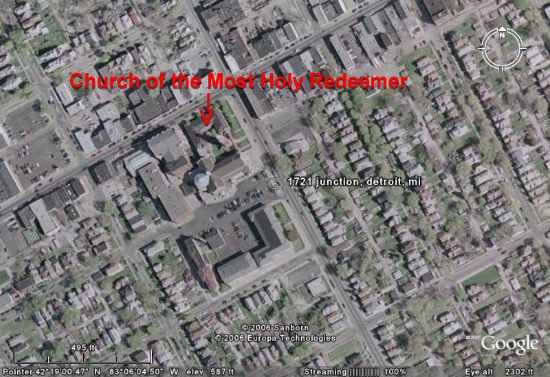
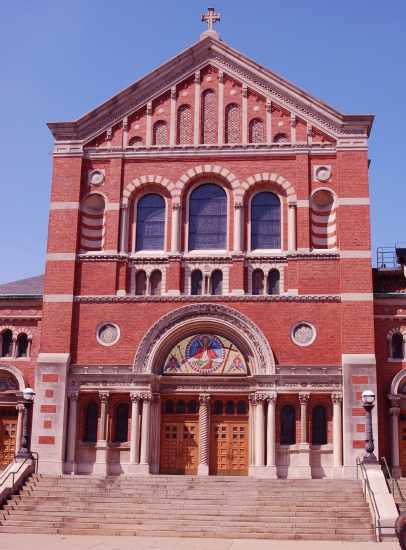
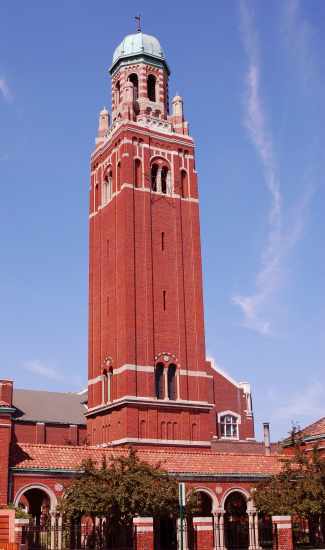
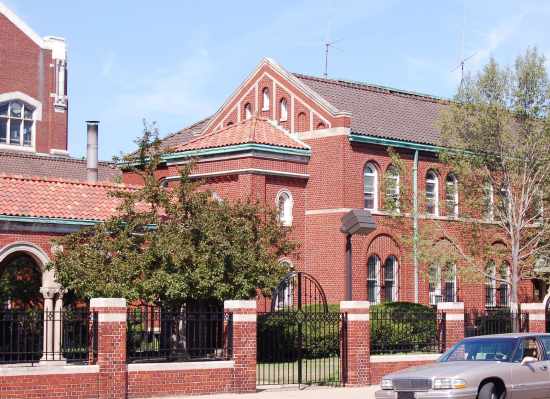
Here is another beautiful institution created and built by the Westside Polonia. It is the gorgeous Church of the Most Holy Redeemer located at 1721 Junction Ave., Detroit, Michigan 48209. And, here is their website:
http://www.mostholyredeemer.net/
Current Google Sanborn map of Holy Redeemer.
Main front edifice
Steeple.
Maybe someone can identify this building for me.
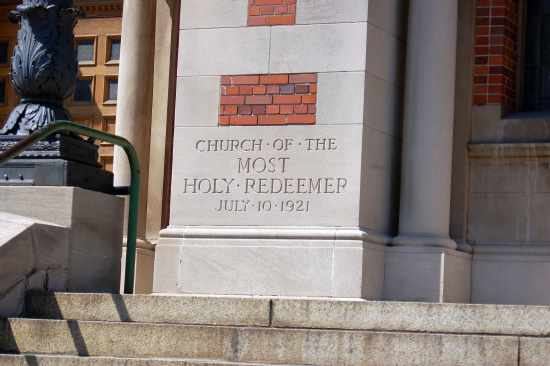
Dated cornerstone.
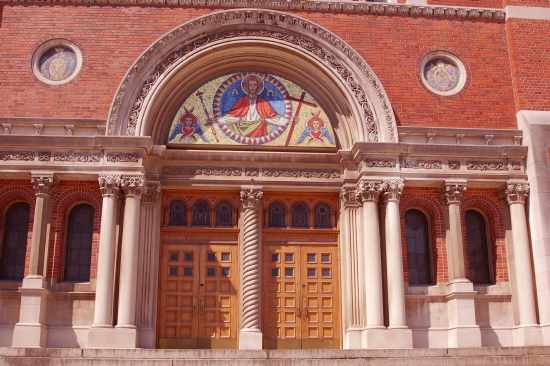
Main entrance.
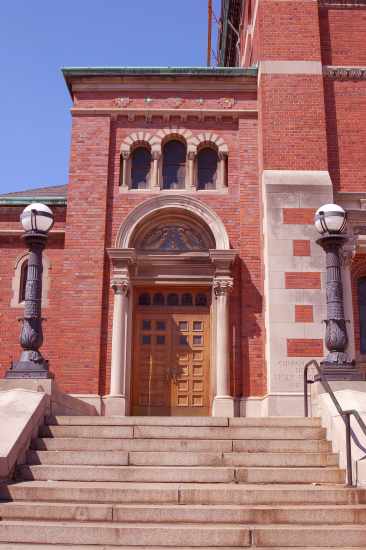
Left front entance.
Mural above the main entrance.
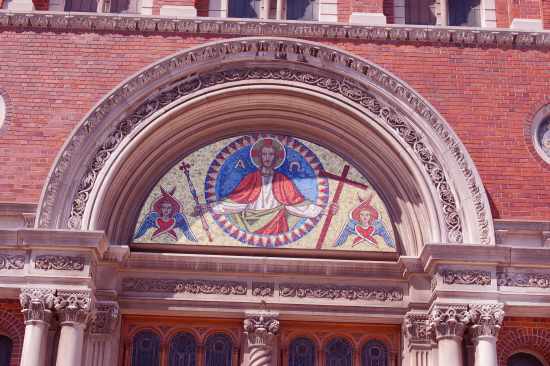
Detail of spire.
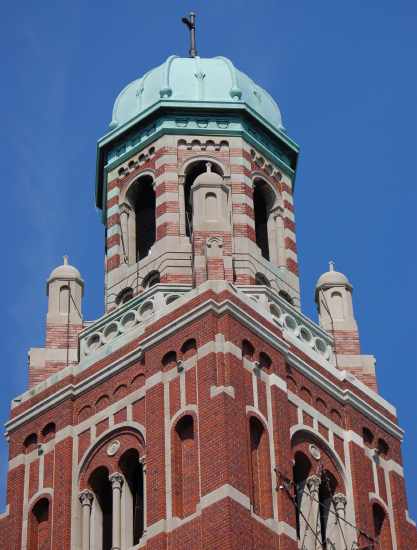
Right front entrance.
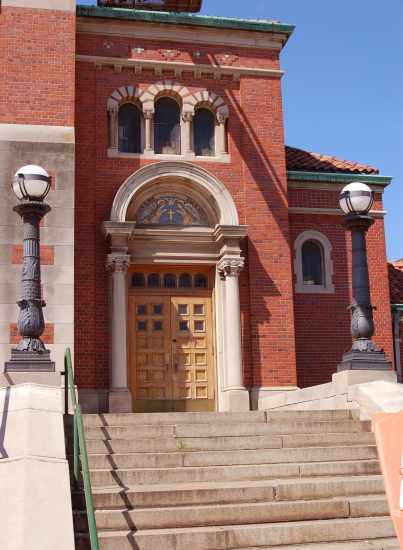
Livedog2 |
Livernoisyard
Member
Username: Livernoisyard
Post Number: 1466
Registered: 10-2004
| | Posted on Thursday, September 21, 2006 - 7:09 pm: | |
Holy Redeemer was originally an Irish parish, which afterwards became a German parish long before the Poles arrived in Detroit. So, it would be a misunderstanding to say it was built under any Polonia. |
Livedog2
Member
Username: Livedog2
Post Number: 1207
Registered: 03-2006
| | Posted on Thursday, September 21, 2006 - 7:56 pm: | |
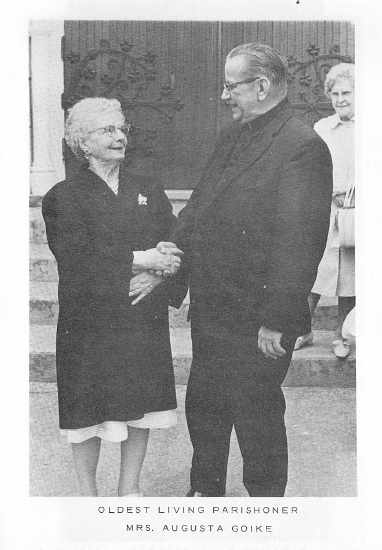
I know you Poles are out there lurking. So, here's a question for you. In the attached photo is the "Oldest Living Parishoner Mrs. Augusta Goike" along with Fr. Joseph Matlenga from St. Albertus Polish Roman Catholic Church. The photo was included in the book St. Albertus 1872 - 1973: Detroit's Oldest Polish Parish History by Rev. Joseph Swastek and Polish Heritage by Rev. John Szopinski, S.J. so it was at 33 years ago that the photo was taken. My question is what ever happened to Mrs. Goike? Is she alive or dead, if alive does anyone know where and if dead where is she buried? Does anyone have a bio or an obit on her or any background information? These people need to be remembered by their own which is you and me!
Livedog2 |
Livedog2
Member
Username: Livedog2
Post Number: 1208
Registered: 03-2006
| | Posted on Thursday, September 21, 2006 - 7:59 pm: | |
Duly noted, Livernoisyard always glad to have the correct facts.
Livedog2 |
Detroitej72
Member
Username: Detroitej72
Post Number: 265
Registered: 05-2006
| | Posted on Thursday, September 21, 2006 - 8:14 pm: | |
Wish I had an answer for you Livedog.
BTW, Holy Redeemer was featured prominatntly in the movie The Rosary Murders which was filmed almost entirely on location.
Not the greatest movie filmed here, but made great use of Detroit sceanery. I'd give the movie a c-plus, but only because I read the book first. |
Hornwrecker
Member
Username: Hornwrecker
Post Number: 1628
Registered: 04-2005
| | Posted on Thursday, September 21, 2006 - 9:16 pm: | |
I think for a parish to part of this, they should have at least had a regularly scheduled Polish Mass, as well as being organized by a predominantly Polish congregation.
Anyway, here is the 1921 Sanborn map of Perrien Park, showing a bandstand and public restrooms. Interesting to see how it changed in the google sat photo.
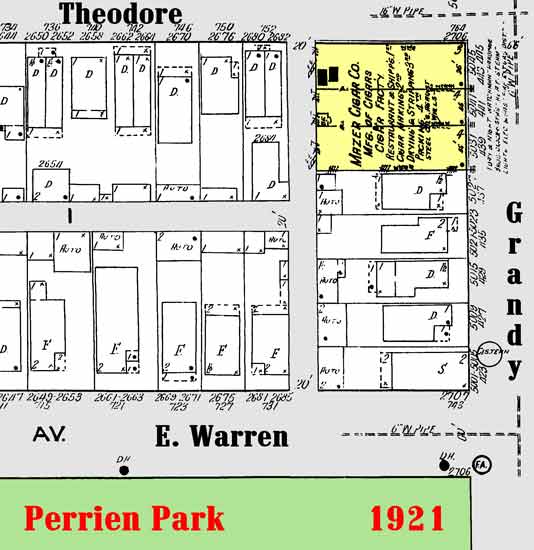
From the Polonia page, it mentioned that the White Eagle Cigar factory was on the corner of Grandy and Theodore. This 1921 map shows that the Mazer Cigar Co was located there: the White Eagle was located at a location closer to Hamtramack (which I'll eventually get to).
There were quite a few cigar makers in this area, I hope to get around to researching this a bit more. My mother mentioned to me that she remembers her aunts working in them back around the 1920-30s, and bringing the factory seconds to my grandfather. |
Livedog2
Member
Username: Livedog2
Post Number: 1209
Registered: 03-2006
| | Posted on Thursday, September 21, 2006 - 9:39 pm: | |
I'm glad you said that about the White Eagle Cigar factory, Hornwrecker because I was over there the other day doing some photos. I was on foot and generally speaking I don't run into problems in these neighborhoods, no matter how bad they are but this one was different. I was at the intersection of Warren and Grandy and saw some guys sitting on the porch at the house on the NW corner there, the one with the black "ghetto gates", and started to walk toward that house. There were two guys sitting on the porch one black and the other white. I started talking before I got there and I heard the white guy say, "It's a reporter!" to the other guy. Well, I'm no reporter but the camera equipment probably made them think I was. I got about 25 feet away and the white guy parted his shirt in a menacing way like he had something in there and said, "If I were you I'd get out of here as quick as I could." I didn't need a second invitation and I hooked 'em out of there pronto. But, from what you said it looks like I was in the wrong location anyway looking for that cigar factory. I did go up a block north of Warren to Theodore and Grandy but I wasn't paying close attention because I had my eyes on those guys back a block over my shoulder. Like I said I don't usually run into problems no matter how run down the neighborhoods are because usually the people where I'm photographing are as freaked out as me. It's like what the hell is this crazy white guy doing here and maybe he's "the man" so we better leave him alone.
Hornwrecker, when you come up with an address or location for the White Eagle Cigar factory drop me a note and I'll "hot foot" it over there and get some photos.
Livedog2 |
Livedog2
Member
Username: Livedog2
Post Number: 1210
Registered: 03-2006
| | Posted on Thursday, September 21, 2006 - 9:44 pm: | |
I had an afterthought, Hornwrecker. My father's sister's husband's mother lived on Carpenter just east of Campau many years ago. Anyway, her husband was taking the streetcar home from work at Dodge Main and got off of the streetcar ands waled in front of it and was killed by the driver. The upshot was that his wife had to go to work to support her and the kids and she worked a cigar factory there somewhere on Hamtramck side of Carpenter just west of Campau. Do you have any idea what the name of the factory was that was located there?
Livedog2 always thinking... |
Lowell
Board Administrator
Username: Lowell
Post Number: 3019
Registered: 10-2003
| | Posted on Thursday, September 21, 2006 - 11:07 pm: | |
Very nice pictures and research Livedog2. Your digital photography has really improved. Keep it coming. |
Mama_jackson
Member
Username: Mama_jackson
Post Number: 25
Registered: 06-2006
| | Posted on Thursday, September 21, 2006 - 11:18 pm: | |
I have been reading the progress of this blog since it started, and it is making me remember stories I have heard over times gone by from my family members. I have been wanting to post my memories and questions.
My mother's family was from West Prussia and that information was very hard won. They did not have the famous Polish pride you all seem to have-for whatever reason.
They lived on Majestic near Tireman in the roaring twenties and the thirties. I remember my mom and aunt talking about how frightened they were when they went to the movies and saw "Dracula" (I think). She said they walked down the middle of the street as they were so frighted from the movie! They spoke fondly of the streetcars, shopping, and movies.
Tonight when I read of the depression in Detroit, I remembered my uncle saying during the depression, he and his brother would sneak into Henry Ford's gardens to eat fresh vegetables because they were so hungry.
He spoke of skipping out on church, buying candy and playing instead of attending church as a little kid.
Also, same uncle had stories of Prohibition, and watching people making beer in their bath tubs.
He had to jump out of a second story window when the speak easy was being raided! Sorry, I am not positive, but I think I remember him saying the speak easy was in Hamtramck area.
He also said he knew most of the members of the Purple Gang!
Their mom, my grandmother is buried at Holy Cross and she died during the Flu epidemic in 1920. They stated the place of death at 159 Rich Street, Detroit. I haven't be able to locate the address. It had to have been tragic, she had just given birth in October and she died in November. She was a mother to five children.
My grandfather was baptised at St. Casimir's Church by Father Paul Gutowski in 1889.
I have often wondered what Catholic church the family would have attended when they lived on Majestic? I think the church was within walking distance, or maybe they took a street car? I tried to look it up on Mapquest, and really didn't find any Catholic churches nearby. Anybody have a guess on the name of the church? |
Livedog2
Member
Username: Livedog2
Post Number: 1211
Registered: 03-2006
| | Posted on Thursday, September 21, 2006 - 11:27 pm: | |
Thank you, Lowell for many things not the least of which is the compliment. It coming from you I consider to be a high compliment because I hold your photography in such high esteem. I have been working hard at it with the detroitfunk guy!
Livedog2 |
Livedog2
Member
Username: Livedog2
Post Number: 1212
Registered: 03-2006
| | Posted on Friday, September 22, 2006 - 12:10 am: | |
Thank you, Mama_jackson for the wonderful remembrances because these stories are what make this thread absolutely come alive! I hope others that have been reading will decide to get in on the fun and share some of their stories, too.
I did some research on the 159 Rich St. address and it doesn't seem to exist anymore. Here's a current Google Sanborn map of the area.
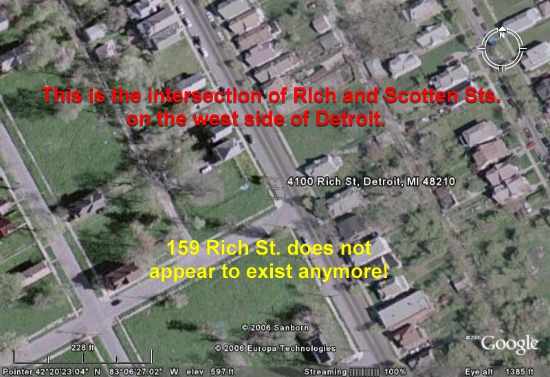
In so far as the parish they might have attended I'll have to research that and get back to you. I've got a book of every parish in Detroit somewhere. Now it's a matter of finding it. :-)
Livedog2 |
Jasia
Member
Username: Jasia
Post Number: 6
Registered: 09-2006
| | Posted on Friday, September 22, 2006 - 7:09 am: | |
The City of Detroit underwent a major renumbering of addresses as of January 1, 1921. Viturally every building in the city had an address change and many street names were changed at that time as well. So what would have been 159 Rich St. before 1921 would not have been 159 Rich St. after 1921. That explains why you can't find that address today. You can look up address and street name changes in the City of Detroit Directory for 1920-1921. The book is available at the Detroit Public Library and on microfilm at some suburban libraries. Perhaps that will help you find the address you are seeking Mama Jackson.
You can find west side Polish parishes on a map from 1920 (before the freeways) on my web site http://www.polishancestry.com/ maps/WestSideChurches1920.pdf According to this map, Rich street only ran a few blocks and it is located right above the words "St. Francis D'Assisi. |
Livedog2
Member
Username: Livedog2
Post Number: 1213
Registered: 03-2006
| | Posted on Friday, September 22, 2006 - 10:13 am: | |
Good info and great website, Jasia. I'm surprised that your handle's not Jski! :-)
Livedog2 |
Livedog2
Member
Username: Livedog2
Post Number: 1214
Registered: 03-2006
| | Posted on Friday, September 22, 2006 - 11:10 am: | |
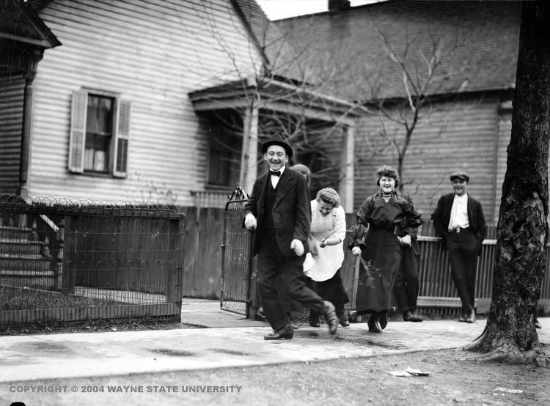
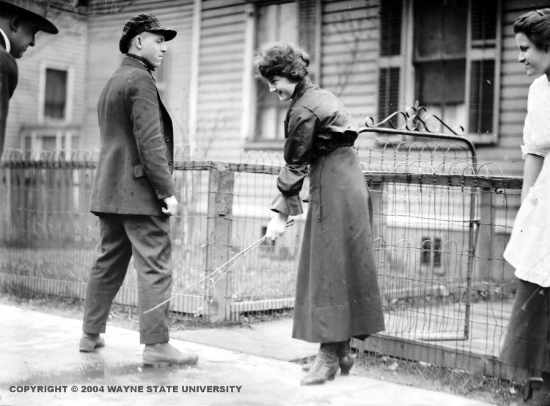
The Polish tradition of Switching Day included girls and boys switching each other on the back of the legs with switches or pussy willows. This shot was taken in Detroit in 1910 of a girl switching a boy all good naturedly.
WSU/VMC
Here is a typical and sweet Polish Tradition called Switching Day
Historically a Polish-American tradition, Switching Day or Dyngus Day celebrates the end of the often restrictive observance of lent and the joy of Easter. Over the decades, Dyngus Day has become a wonderful holiday to celebrate Polish-American culture, heritage and traditions. Switching Day is traditionally celebrated on the Monday after Easter when Poles mark the end of the somber Lent season with a great big party.
Each year, various definitions, interpretations and guesses appear: anything from switching with branches to the infamous "Sadie Hawkins Day." According to the Encyclopedia Staropolska, by A. Gloger (circa the 19th century), the word can be traced back to a medieval form of the word "Dingnus," which means "worthy, proper, or suitable." Gloger cites a use of the word, namely "ransom during a war to protect against pillage," as well as a German usage of "Dingen," which means "to come to an agreement, evaluate or buy back."
There are many stories that attempt to explain the origins of the day. Many Polish customs date back to pre-Christian practices of our Slavic ancestors. The custom of pouring water is an ancient spring rite of cleansing, purification, and fertility. The same is true of the complimentary practice of switching with pussy willow branches. Since 966 A.D., Dyngus Day has been associated with the baptism of Prince Mieszko I. Tradition states that Prince Mieszko I along with his court were baptized on Easter Monday. Thus, Dyngus Day and its rites of sprinkling with water have become a folk celebration in thanksgiving for the fact that the first king of Poland was baptized into Christianity, bringing Catholicism to Poland. In more modern times, the tradition continued when farm boys in Poland wanted to attract notice from the girls of their choice. It was custom to throw water and hit the girls on their legs with twigs or pussywillows. Cologne was used instead of water by the more gallant lads. The ladies would reciprocate by throwing dishes & crockery and Tuesday was their day of revenge, imitating the same tactics.
In rural Poland the tradition of Dyngus Day also included the traveling to neighbor's homes, going door-to-door looking for treats. Often these treats were hard boiled eggs other Easter foods. While knocking on the door, youth would exclaim the following rhyme along with it’s translation.
Smigus! Dyngus! Na uciechę z kubla wode lej ze śmiechem! Jak nie z kubla , to ze dzbana, Smigus - dyngus dzis od rana! Staropolski to obyczaj, Zebys wiedzial i nie krzyczal, gdy w Wielkanoc , w drugie swieto, bedziesz kurtke mial zmoknieta.
Smigus! Dyngus! All for fun, Dump some water with a smile! If not from a cup, then from a pitcher, Smigus-Dyngus starts at dawn! It’s an old Polish custom, just so you’ll know and not yell, when on the second day of Easter, your jacket’s all soaking wet
Another 1910 photo of a girl switching a boys legs on Switching Day.
WSU/VMC
My father use to tell me about Switching Day all the time. It was a day that girls could act as the aggressor with boys that they liked.
Livedog2 |
Hornwrecker
Member
Username: Hornwrecker
Post Number: 1630
Registered: 04-2005
| | Posted on Friday, September 22, 2006 - 11:11 am: | |
Dog, I'm not sure if they are related, but until a year ago, there was a Goike produce stand on the north side of 10 Mile, just west of Ryan. They had a small farm where they grew most of the vegetables sold there. |
Livedog2
Member
Username: Livedog2
Post Number: 1215
Registered: 03-2006
| | Posted on Friday, September 22, 2006 - 11:15 am: | |
Hornwrecker, that's a good lead, I'll follow up on it. It may be that they are at least related to her and that name, Goike, is not that common even for the Polish. I'll let you know.
Livedog2 |
Hornwrecker
Member
Username: Hornwrecker
Post Number: 1631
Registered: 04-2005
| | Posted on Friday, September 22, 2006 - 11:38 am: | |
From the Politcal Graveyard site:
Goike, Raymond C. — of Detroit, Wayne County, Mich. Democrat. Candidate in primary for Michigan state house of representatives 10th District, 1970. Still living as of 1970.
Google cache of DetNews article on local growers, Pat Goike.
link |
Jasia
Member
Username: Jasia
Post Number: 7
Registered: 09-2006
| | Posted on Friday, September 22, 2006 - 3:01 pm: | |
Augusta Goike was born on June 8, 1882 and immigrated to the US in 1902 according to the 1930 census. She and her husband Joseph had three children, Helen, Rita, and Raymond. Joseph also had 4 children from a previous marriage that lived with them in their home at 2278 E. Canfield, in Detroit (again, as of the 1930 census). Both Augusta and her husband spoke Polish but listed "West Prussia, Germany" as the country they immigrated from. Their son Raymond who was born in 1922 died January 14, 1992. Augusta Goike died May 26, 1979 in St. Clair Shores, MI. |
Livedog2
Member
Username: Livedog2
Post Number: 1217
Registered: 03-2006
| | Posted on Friday, September 22, 2006 - 4:10 pm: | |
Thank you Jasia, I invite you to post Augusta Goike's information that you listed on this thread in the thread on this Forum called “Final Resting Place of Famous Detroiters...” as the oldest living parishioner at St. Albertus Polish Roman Catholic Church on the occasion of their Centennial Year Celebration. If you are not interested let me know and I’ll post her along with the photo of her and Fr. Matlenga earlier in this thread. Just let me know.
Livedog2 |
Kathleen
Member
Username: Kathleen
Post Number: 1599
Registered: 10-2003
| | Posted on Friday, September 22, 2006 - 6:55 pm: | |
St. Hyacinth Church has been mentioned a couple of times, but not yet covered in depth....
St. Hyacinth Parish was established in 1907 by Bishop John Foley as the Polish community moved north and east of St. Albertus. Located on McDougall between Warren and E. Grand Blvd. (officially has a Farnsworth address), it is still an active parish with a 9am Sunday mass in Polish. The church has a faithful group of parishioners who are invested in its wellbeing and so have supported recent efforts to repaint the interior. It is worth a visit!!
The Parish has just begun a series of celebrations in honor of its 100th Anniversary. In fact, just last Sunday, they held a Parish and School Alumni Mass that included tours of the church and school. Sorry I missed that!
Here are some photos I shot when Dave and I visited St. Hyacinth back in 2002:
The church and original school building
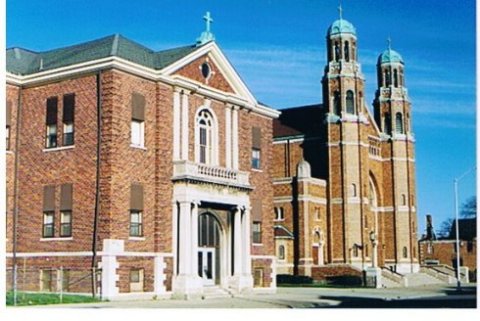
The church
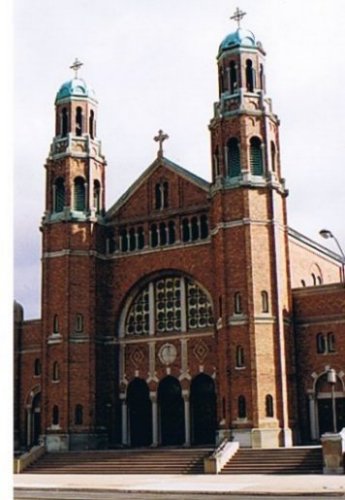
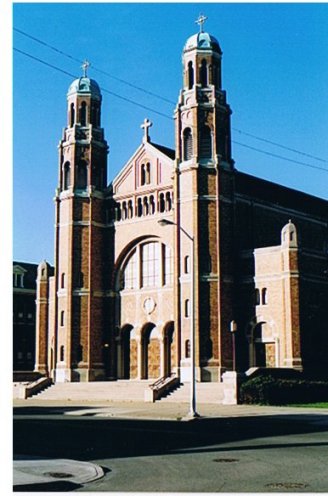
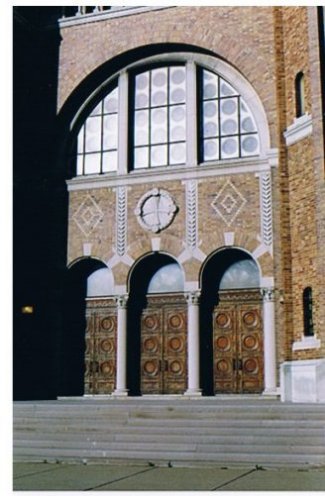
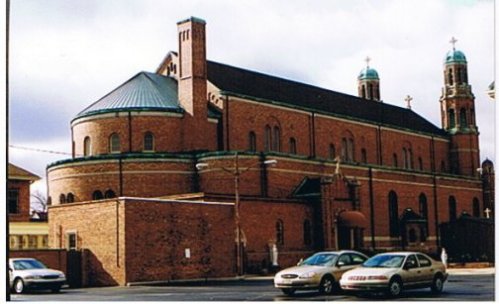
And some interior views:
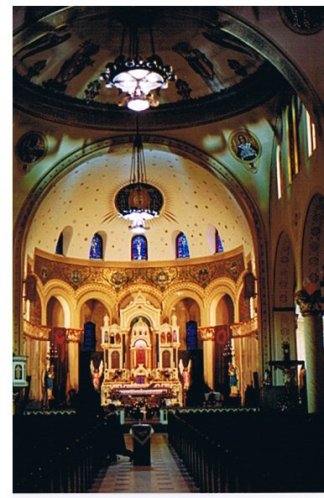
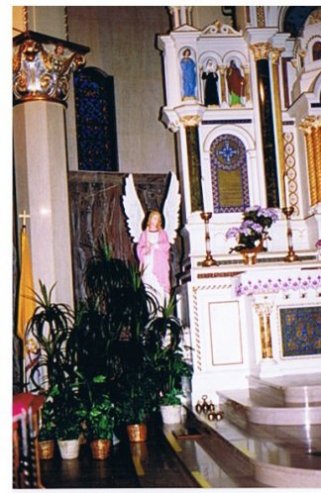
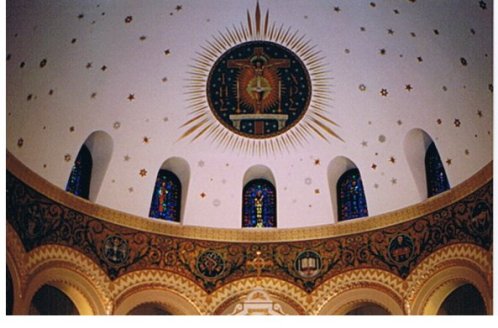
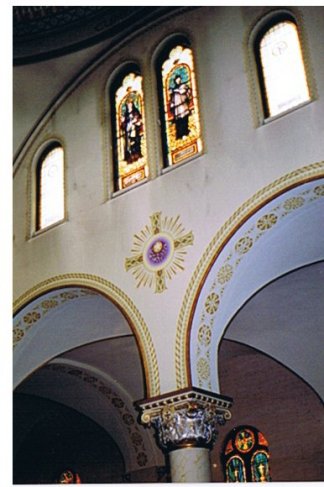
In the vestibule at the McDougall door, there is the Polish American Mural painted by well-known local muralist Dennis Orlowski:
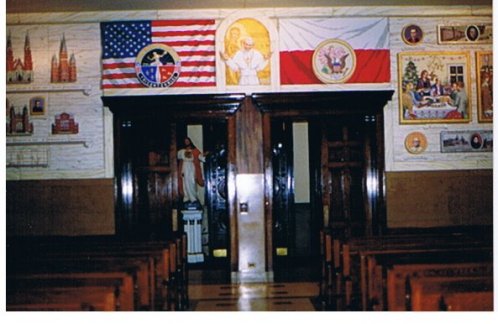
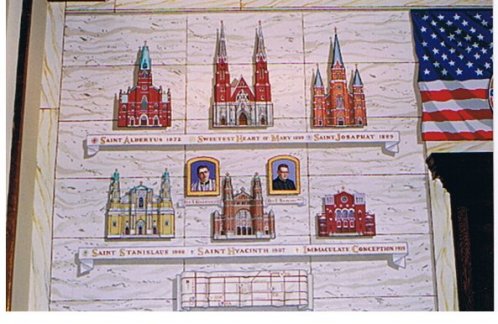
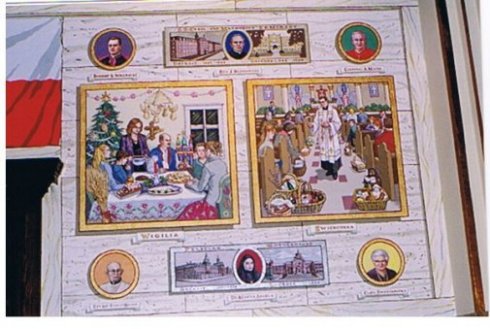
For more on St. Hyacinth: http://www.sainthyacinth.com/index.htm
For more on Dennis Orlowski, who has painted many notable murals covering Polish heritage:
http://orlowskimurals.com |
Livedog2
Member
Username: Livedog2
Post Number: 1219
Registered: 03-2006
| | Posted on Friday, September 22, 2006 - 7:51 pm: | |
Dziekuja Pani Kathleen for the great information and shots!
Livedog2 |
Livedog2
Member
Username: Livedog2
Post Number: 1220
Registered: 03-2006
| | Posted on Friday, September 22, 2006 - 9:00 pm: | |
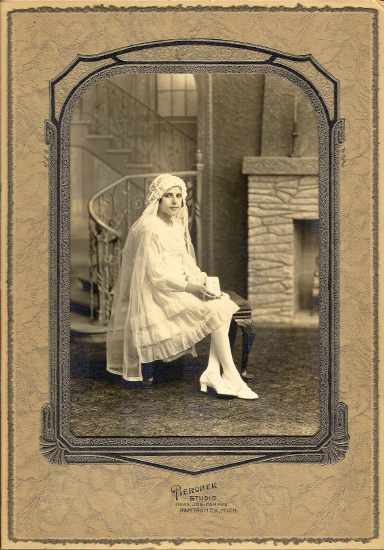
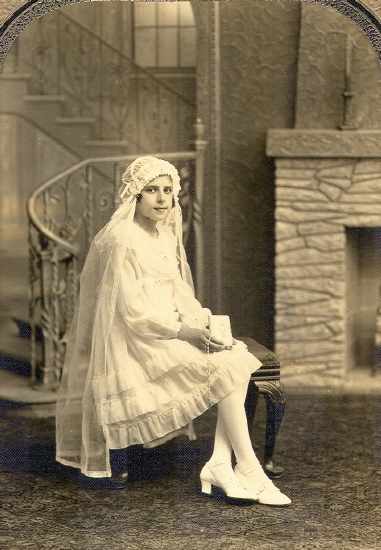
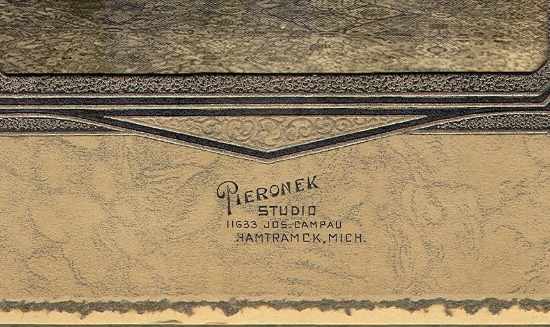
Here’s a formal portrait of a young Polish girl that has just made her 1st Holy Communion. Often times there is a year card in the photograph showing the year of the event but none in this one. My best guess is it might be around 1930 or so. The photograph was made at the Pieronek Studio at 11633 Jos. Campau in Hamtramck, Mich. They took many formal photographs for the Polish immigrant community.
The quality of the photograph was so good that it will probably last another 100 or 200 years. And, now that we have digital imaging the image can last forever! The photographic process wasn’t the only thing that was high quality of the package. The container or frame it is presented in is just as high a quality item as the picture.
I don’t know who the young lady is because I bought this at a yard sale in Hamtramck a few years ago. But, if anyone knows who this young girl is I would appreciate being able to put a name with the image. And, if a proven relative of this girl should surface I could be talked into giving it to them. But, it is a beautiful picture on beautiful photo paper in a beautiful folder.
Image of the girl and folder.
Close up of the girl.
Photographer's embossing.
Folder or frame it came in.

Livedog2 |
Mama_jackson
Member
Username: Mama_jackson
Post Number: 26
Registered: 06-2006
| | Posted on Friday, September 22, 2006 - 11:40 pm: | |
Thanks to you, Livedog for your research on Rich Street! It was probably re-numbered or removed due to expansion of the expressway.
I, too, have a very nice photo of a set of front steps with children. I chuckled to myself when I read that!
Jasia, I will check out our local library for the directory you mentioned. They have a pretty good genealogy section with a lot of information concerning Detroit.
Does anybody have a current photo of St. Casimir Catholic church? I know it was closed in 1989, but is still being used as a church.
It's the church my grandfather was baptised in, in 1889! Yikes, I feel old.....
Thanks again! |
Livedog2
Member
Username: Livedog2
Post Number: 1221
Registered: 03-2006
| | Posted on Saturday, September 23, 2006 - 12:39 am: | |
I posted some photos earlier in this thread on St. Casimir's, Mama_jackson. I posted a photo of the original St. Casimir's Church and a bunch more of the St. Casimir's Church Complex with school and other buildings along with the new church. Go to page 3 of this thread and refer to my post of, "Posted on Wednesday, September 13, 2006 - 12:55 am:" and it will take you to the beginning. I have more photos of St. Casimir's that I need to clean up and get posted, too.
Livedog2 |
Jasia
Member
Username: Jasia
Post Number: 8
Registered: 09-2006
| | Posted on Saturday, September 23, 2006 - 9:12 am: | |
A comment on the porch steps pictures:
Someone once told me (I'd give them credit if I could remember who it was that told me ;-) that there was a deliberate reason people took pictures of their families this way. Many people who took these pictures planned to send them to family back in Poland and they were concerned that if they showed their house their family would think they were "rich" because even modest houses here were much nicer than the basic mud huts that so many people lived in in the rural villages in Poland. And if their relatives saw how "grand" they were living they would expect them to send them even more money. So if you only showed the porch steps you didn't reveal much. |
Livedog2
Member
Username: Livedog2
Post Number: 1223
Registered: 03-2006
| | Posted on Saturday, September 23, 2006 - 2:56 pm: | |
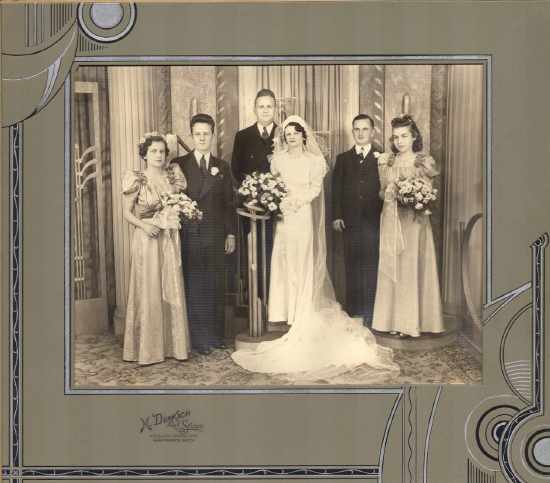
Here’s another great old photo of a Polish marriage from what appears to be from the late 1930’s or early 1940’s would be my best guess. Again, I don’t know who the people in the photo are because I bought it a garage sale in Hamtramck. If anyone knows these people I would appreciate knowing their names. And, again, if someone can prove that they are their relatives I might be talked into giving it to them.
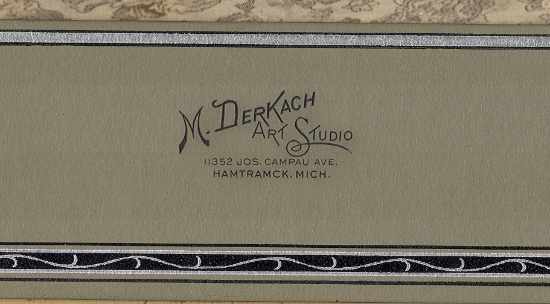
The photo was taken by the M. Derkach Art Studio at 11352 Jos. Campau Ave., Hamtramck, Mich. It is a high quality image printed on very good photo stock. The presentation folder/frame has an Art Deco look to it which might help to date it.
Front cover/folder/frame.

Wedding party.
Kerkach embossing identification.
Back cover/folder/frame.
Livedog2 |
Hornwrecker
Member
Username: Hornwrecker
Post Number: 1636
Registered: 04-2005
| | Posted on Saturday, September 23, 2006 - 10:40 pm: | |
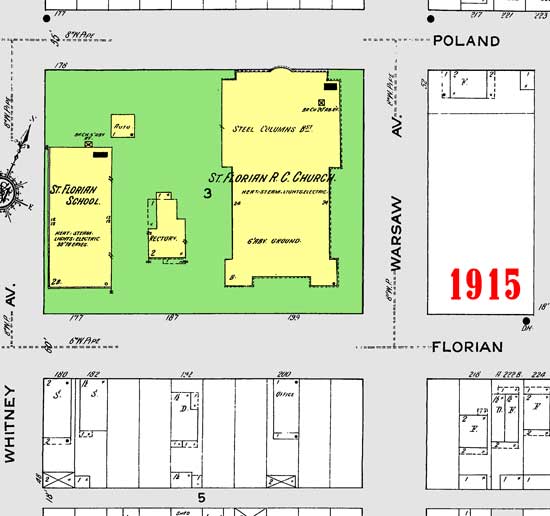
St Florian, 1915 Sanborn map.
 |
Livedog2
Member
Username: Livedog2
Post Number: 1224
Registered: 03-2006
| | Posted on Saturday, September 23, 2006 - 11:45 pm: | |
The sad closing of St. Florian School back in 2005 after 97 years of operation.
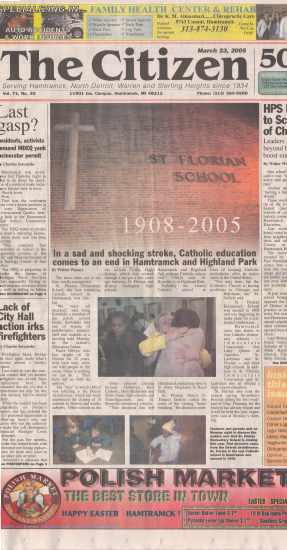
Livedog2 |
Detroitej72
Member
Username: Detroitej72
Post Number: 272
Registered: 05-2006
| | Posted on Saturday, September 23, 2006 - 11:53 pm: | |
Father Joseph Karasiewicz, former paster of Immaculate Conception Parish in Poletown, died alone on Dec. 14 at the rectory of St. Hyacinth.
This was after the long battle of Poletown, when GM destroyed the north end of Poletown to build a mammoth structer for a cadilac plant. He was 59 years old.
Friends of Father Joe speculated he died of a broken heart. This was just before the Christmas Holiday, and many thought it was too much for Fr. Joe to bear without a church.
One could speculate the whole affair was a classic case of gentrification, tear down a whole neighborhood for the good of the masses.
Only history will decide...
Detroitej72...Long Live Poletown! |
Livedog2
Member
Username: Livedog2
Post Number: 1225
Registered: 03-2006
| | Posted on Saturday, September 23, 2006 - 11:53 pm: | |
Beautiful St. Florian Polish Roman Catholic Church in Hamtramck, Michigan.
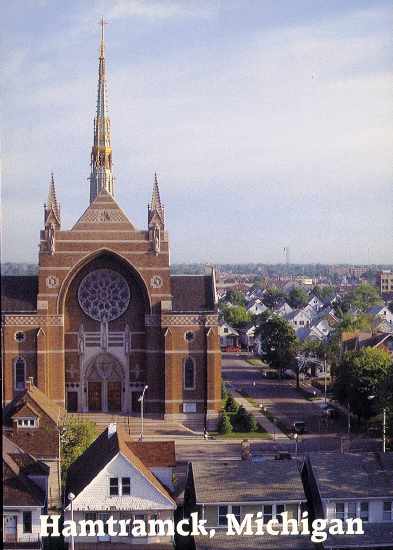
Livedog2 |
Detroitej72
Member
Username: Detroitej72
Post Number: 273
Registered: 05-2006
| | Posted on Saturday, September 23, 2006 - 11:55 pm: | |
Another shot of St. Florian |
Detroitej72
Member
Username: Detroitej72
Post Number: 274
Registered: 05-2006
| | Posted on Saturday, September 23, 2006 - 11:58 pm: | |
Thanks Livedog for keeping the Polish Pride alive and well. |
Livedog2
Member
Username: Livedog2
Post Number: 1226
Registered: 03-2006
| | Posted on Sunday, September 24, 2006 - 12:01 pm: | |
St. Florian Polish Roman Catholic Church on the horizon. Just another perspective!
Can anyone guess what desolate part of Detroit this photo was taken from?
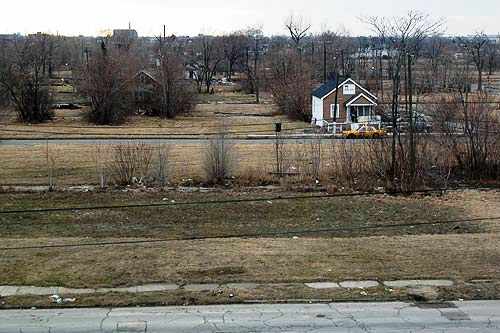
Livedog2 |
Livedog2
Member
Username: Livedog2
Post Number: 1230
Registered: 03-2006
| | Posted on Sunday, September 24, 2006 - 1:17 pm: | |
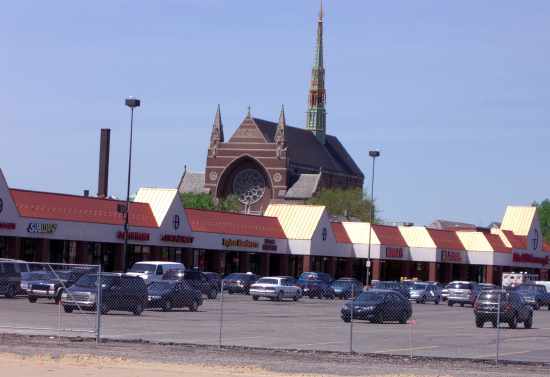
St. Florian Polish Roman Catholic Church from Pope Mall on Campau.
Livedog2 |
Livernoisyard
Member
Username: Livernoisyard
Post Number: 1482
Registered: 10-2004
| | Posted on Sunday, September 24, 2006 - 3:24 pm: | |
Let it go... I've never been offended by ethnic jokes. The more attention you draw to them, the more of them the kids will dump here.
Let's make it appear that we're not as ultrasensitive as some in Dearborn or elsewhere. |
Livedog2
Member
Username: Livedog2
Post Number: 1231
Registered: 03-2006
| | Posted on Sunday, September 24, 2006 - 3:49 pm: | |
The voice of reason, Livernoisyard and you are right!
Livedog2 |
Karenka
Member
Username: Karenka
Post Number: 4
Registered: 01-2006
| | Posted on Sunday, September 24, 2006 - 3:53 pm: | |
This afternoon Marian Krzyzowski of the U-M Business School gave a slide presentation on his Chene Street history project at St. Albertus. For the last 4 years he and a handfull of student assistants have been documenting the history of the Chene Street neighborhood, collecting and digitizing photos and artifacts, interviewing former residents and business people, etc. I'm not sure if this project has already been discussed on this thread, but with the wealth of info. among the posters here, some of you may want to contact Marian and share what you've got. He will scan photos and return the originals, give proper credits, and ensure that your personal knowledge and expertise is available to scholars and researchers. Contact info: Marian Krzyzowski, U of M business school, at 734.998.6236 or by e-mail at mjsk@umich.edu. |
Kris
Member
Username: Kris
Post Number: 5
Registered: 03-2006
| | Posted on Sunday, September 24, 2006 - 3:58 pm: | |
Does anyone know the height of St. Florians? |
Livedog2
Member
Username: Livedog2
Post Number: 1233
Registered: 03-2006
| | Posted on Sunday, September 24, 2006 - 5:03 pm: | |
"St. Florian Polish Roman Catholic Church's spire rises nearly 200 feet above the street level and was designed to stand in stark contrast to the smokestacks of the heavy industry that characterized the city surrounding St. Florian." per Wikipedia
Livedog2 |
Jimaz
Member
Username: Jimaz
Post Number: 676
Registered: 12-2005
| | Posted on Sunday, September 24, 2006 - 5:16 pm: | |
quote:Does anyone know the height of St. Florians?
I think one could measure it by standing a known distance away and measuring the angular elevation to the top. Then multiply the distance by the tangent of the elevation. |
Livernoisyard
Member
Username: Livernoisyard
Post Number: 1484
Registered: 10-2004
| | Posted on Sunday, September 24, 2006 - 5:24 pm: | |
Another way would be to climb it, and with your stop watch in hand, measure the time to drop yourself to the ground, and apply the laws of physics--or have somebody do this for you--afterwards.
But another method would be to use my Garmin 301 Forerunner GPS/HR monitor. Its elevation indication is fairly accurate. Just measure the elevation at the base and at the top. Getting to the top, though, is the hard part... |
Horn_wrecker
Moderator
Username: Horn_wrecker
Post Number: 8
Registered: 08-2006
| | Posted on Sunday, September 24, 2006 - 5:30 pm: | |
(Any posts not relevant to the subject of a history thread, will be removed by me when they get over to the HOF section, if not sooner by an admin.)
I went back and looked at the "original" Sanborn for St. Florian, and this is the only church, so far, that does not have the height of the spire on the drawing. I suspect it was still under construction when the map was issued. So, no help here. |
Livedog2
Member
Username: Livedog2
Post Number: 1234
Registered: 03-2006
| | Posted on Sunday, September 24, 2006 - 5:52 pm: | |
Did I have you for geometery at St. Florian, Jimaz? :-)
Livedog2 |
Livedog2
Member
Username: Livedog2
Post Number: 1235
Registered: 03-2006
| | Posted on Sunday, September 24, 2006 - 6:11 pm: | |
Another view of St. Florian Polish Roman Catholic Church.
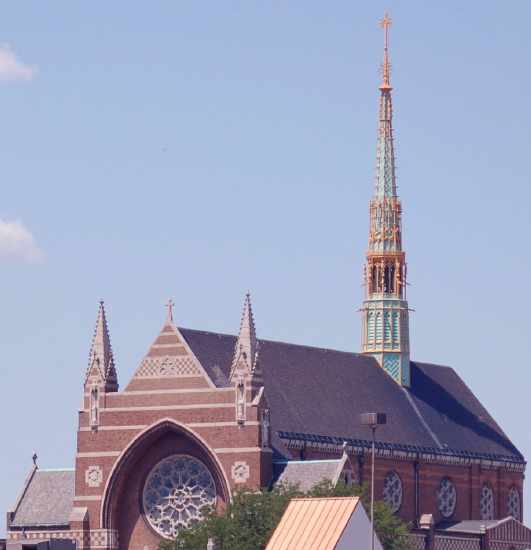
St. Florian Polish Roman Catholic Church's spire.
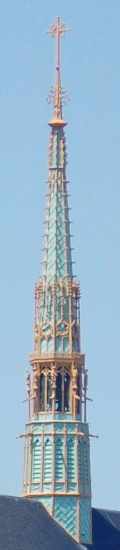
Livedog2 |
Jimaz
Member
Username: Jimaz
Post Number: 677
Registered: 12-2005
| | Posted on Sunday, September 24, 2006 - 6:15 pm: | |
Livedog2, no, nor trigonometry. I have no affiliation with St. Florian.
These are all spectacular photos. Bravo! |
Livedog2
Member
Username: Livedog2
Post Number: 1236
Registered: 03-2006
| | Posted on Sunday, September 24, 2006 - 6:23 pm: | |
Oh gheez, thanks for the consideate compliment, Jimaz! You are too kind.
Here's the current Google Sanborn map of St. Florian Polish Roman Catholic Church.
Livedog2
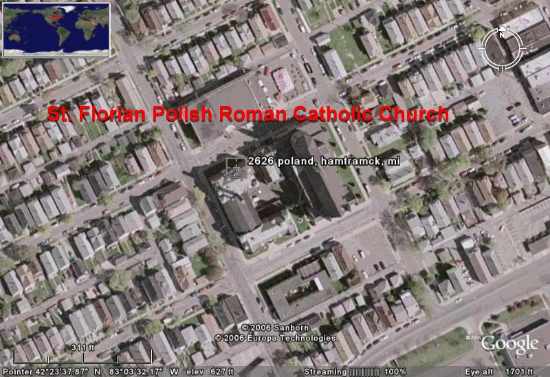 |
Detroitej72
Member
Username: Detroitej72
Post Number: 278
Registered: 05-2006
| | Posted on Sunday, September 24, 2006 - 6:51 pm: | |
Great Shots Livedog, in both pictures and at a_holes who try to wreak this thread!
I will take a guess about where your earlier pic was taken. I'll say the neighborhood just north of Hamtramck around the Davison. Am I correct?
Detroitej72 |
Livedog2
Member
Username: Livedog2
Post Number: 1237
Registered: 03-2006
| | Posted on Sunday, September 24, 2006 - 7:42 pm: | |
That was a good guess, Detroitej72. The shot was taken around Davison and say Gallagher just north of Davison. I don't remember exactly but it was around there. I keep thinking to bring my recorder with me and just speak into my recorder everytime I take a shot. Then when I download my photos I could name them in a way that is descriptive of exactly where they were take. But, that seems like so much work and I'm more interested in taking the photos instead of the admin work associtaed with them. I'm usually familiar enough with the neighborhoods in Detroit, especially on the east side that I can recognize where I was at by looking at the shot.
Livedog2 |
Hornwrecker
Member
Username: Hornwrecker
Post Number: 1638
Registered: 04-2005
| | Posted on Sunday, September 24, 2006 - 8:21 pm: | |
I suspect that this was a mostly Polish bakery by its location. The Union Co-op Bakery at 5801 Grandy & Hendrie, from the 1921 Sanborn map.
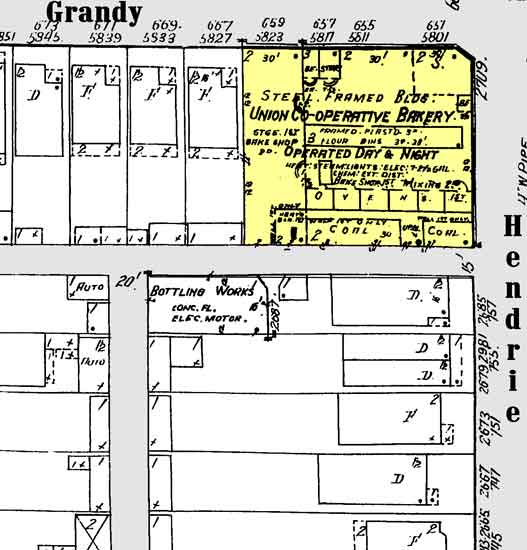
Two story buiding with six coal-fired ovens, operating around the clock.
There is also a small bottling works in the alley behind it. |
Livedog2
Member
Username: Livedog2
Post Number: 1238
Registered: 03-2006
| | Posted on Sunday, September 24, 2006 - 8:35 pm: | |
Great find, Hornwrecker!
Livedog2 |
Livedog2
Member
Username: Livedog2
Post Number: 1239
Registered: 03-2006
| | Posted on Sunday, September 24, 2006 - 8:57 pm: | |
Hornwrecker, it looks like the building at Grandy and Hendrie is still there from this current Google Sanborn map. I'll have to peruse my photo files to see if I have a photo of that building.
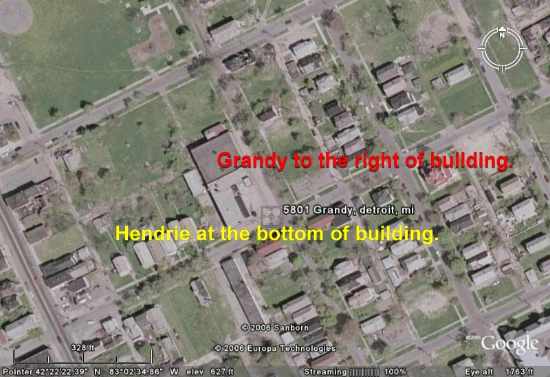
Livedog2 |
Lowell
Board Administrator
Username: Lowell
Post Number: 3025
Registered: 10-2003
| | Posted on Sunday, September 24, 2006 - 10:59 pm: | |
Livedog, that urban prairie scene is a shot I took out a back window of St. Cyril's church/school in 2003... it must have been mixed up in your collection. I think I posted it on the forum once.
And, hey, here is a mild thread jack, shout out to our Ukranian friends. They were pretty tight with the Detroit Polish community.
Ukranian Workers Home
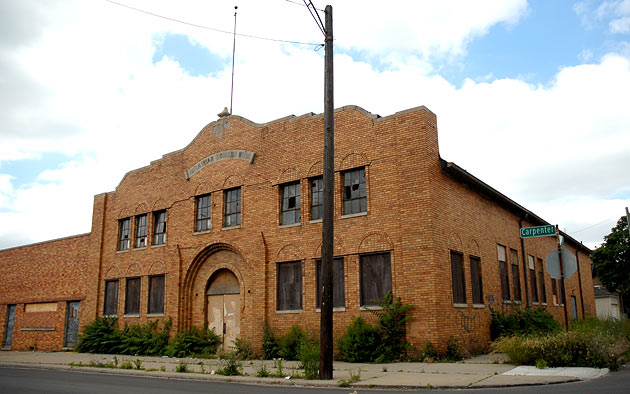 |
Livedog2
Member
Username: Livedog2
Post Number: 1240
Registered: 03-2006
| | Posted on Monday, September 25, 2006 - 12:10 am: | |
You're absolutely right, Lowell. I was really kind of wondering about that shot but then again I take so many photos that sometimes I lose track. Sorry about plagerizing your shot without even a credit or a "by your leave." I'll try to be more careful in the future about using photos that I have questions about.
That Ukrainian Workers Home is one of my favorites and here's my contribution to it. Besides, the Ukrainians are almost Polish and if they could just make the sign of the cross in the right way we would make them honorary Poles. :-)
Ukrainian Workers Home.
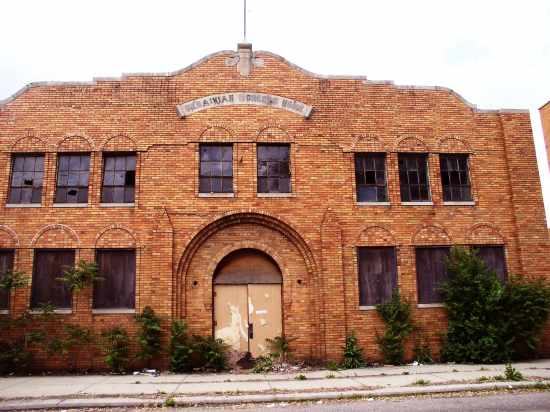
Close-up of the same.
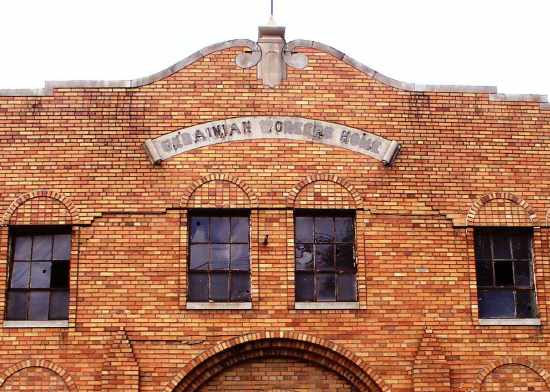
Livedog2 |
Livedog2
Member
Username: Livedog2
Post Number: 1241
Registered: 03-2006
| | Posted on Monday, September 25, 2006 - 2:07 pm: | |
I know this is going to be like a needle-in-a-haystack but if you don't ask you never get anything. Does anyone out there have a photo circa 1919 of whatever was at 782 Chene St. which is just south of Lafayette St. E.? There is nothing but a paved parking lot there, now.
Livedog2 |
Hornwrecker
Member
Username: Hornwrecker
Post Number: 1643
Registered: 04-2005
| | Posted on Monday, September 25, 2006 - 5:16 pm: | |
The White Eagle Tobacco Co., 400 Grandy near Hancock, from 1910 Sanborn map. (old numbering system address)
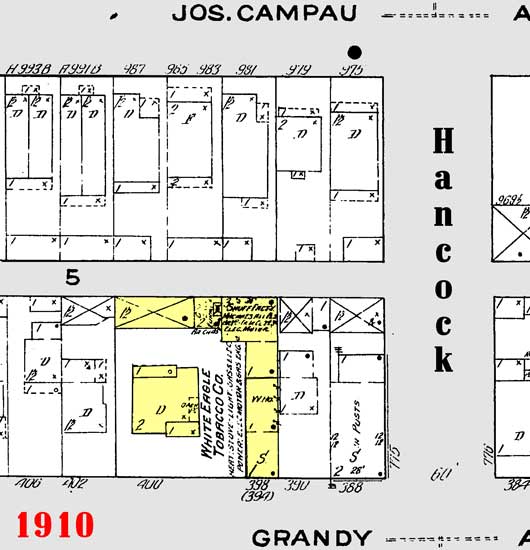
Looks like a house and some one story sheds joined together. The shed in the corner is labeled as Snuff Factory.
(Message edited by Hornwrecker on September 25, 2006) |
Livedog2
Member
Username: Livedog2
Post Number: 1242
Registered: 03-2006
| | Posted on Monday, September 25, 2006 - 6:07 pm: | |
Can someone direct me to resourses that can tell me when Detroit transitioned from the old street address numbering system to the new street address numbering system and how to relate it from the old to the new? I am having some difficulty pinpointing the location of buildings, factories, residents and geographic landmarks. I am especially having trouble with my east side locations!
Livedog2 |
Livedog2
Member
Username: Livedog2
Post Number: 1244
Registered: 03-2006
| | Posted on Monday, September 25, 2006 - 7:10 pm: | |
Name: Charles Cawetzka
Claim to Fame: Charles Cawetzka is a genuine Polish-American hero, born and raised in Detroit. He was awarded the Congressional Medal of Honor for action during the Spanish American War.
Birth Date: Mar. 1, 1877
Detroit
Wayne County
Michigan, USA
Death Date: Death: Oct. 23, 1951
Romulus
Wayne County
Michigan, USA
Military Biography:
Rank and organization: Private, Company F, 30th Infantry, U.S. Volunteers.
Place and date: Near Sariaya, Luzon, Philippine Islands, 23 August 1900
Entered service at: Wayne, Mich. Birth: Detroit, Mich. Date of issue: 14 March 1902.
Congressional Medal of Honor Citation:
In action with insurgent guerilla forces at Sariaya, Luzon, Philippine Islands on August 23, 1900, Private Charles Cawetzka valiantly and single-handedly withstood a superior enemy force in order to defend and protect a wounded comrade. For his heroic one-man-stand he was awarded the Medal of Honor.
Buried: Romulus Memorial Cemetery
Location of the Cemetery: Romulus Memorial Cemetery is located on Shook and McBride Roads in Romulus Township. Yahoo map:
http://maps.yahoo.com/maps_result?addr=shook+and+Mcbride+rd&csz=romulus%2C+mi&country=us&new=1&name=&qty=
Photo of Charles Cawetzka is on the way just as soon as someone finds it and posts it on this thread.
Credit: Ssg. Al Barrara
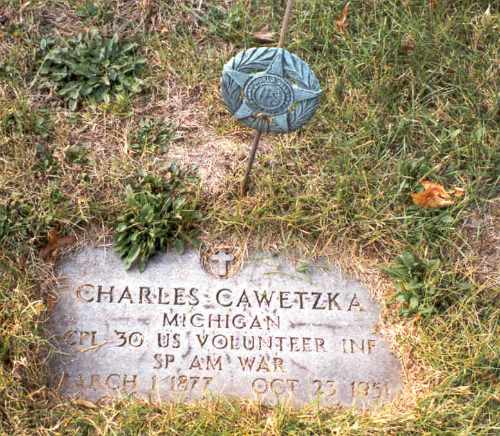
Credit: G. William Whitmore Jr
Livedog2 |
Hornwrecker
Member
Username: Hornwrecker
Post Number: 1645
Registered: 04-2005
| | Posted on Monday, September 25, 2006 - 9:52 pm: | |
Thanks for that info on Pvt. Cawetzka . Sounds like what he did is one of the reasons that the Colt M1911 was developed.
For the street numbering change, you'd need a copy of the 1920-21 Detroit Street guide, of which as of yet, I do not have a copy of. I'll let you know if I get more than the few pages that I now have. None of which covered that cigar maker.
Interesting to note that the cigar factory was at 400, but on the Jos Campau side of the block it was in the 900s. No wonder they standardized it.
(Message edited by Hornwrecker on September 25, 2006) |
Jasia
Member
Username: Jasia
Post Number: 9
Registered: 09-2006
| | Posted on Monday, September 25, 2006 - 9:59 pm: | |
The City of Detroit Directory for 1920/21 has the complete list of the streets that were renamed as well as each and every residential and commercial building with the old and the new addresses. The directory is available at the Detroit Public Library, Main Branch in the Burton Collection room on the first floor behind the desk where the librarian sits (you have to ask for it). |
Hornwrecker
Member
Username: Hornwrecker
Post Number: 1646
Registered: 04-2005
| | Posted on Monday, September 25, 2006 - 10:15 pm: | |
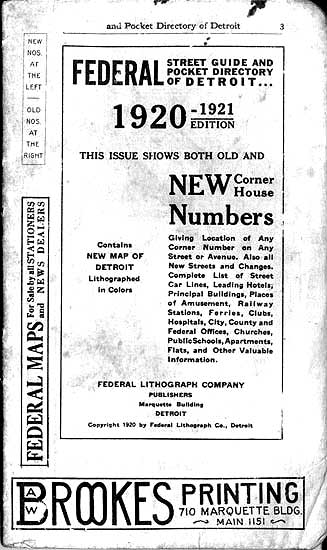 |
Livedog2
Member
Username: Livedog2
Post Number: 1245
Registered: 03-2006
| | Posted on Monday, September 25, 2006 - 10:19 pm: | |
When I was in the Corps they said the reason they developed the Colt M1911 was because of those "banana wars" down in the islands. The natives would get all worked up smoking that hemp, drinking that pineapple "home brew" and chewing that beetle nut. Then they'd tie wet rawhide aroung their genitiles real tight and started dancing around the fire. By the time that rawhide dried up the next morning just before they attacked they'd be in so worked up and so crazy that when the Marine officers would empty their .38's in them they'd keep coming after they were already dead on their feet and kill the officers. So, that's when they said they needed a knock down gun and they came up with the Colt M1911. If you shoot somebody in the hand you'll knock them down and that's what they needed. The guys that lead the charge back in the "old Corps" so to speak were Chesty Puller and "Iron man" Lee. Between the two of them they had nine (9), count them, nine (9) Navy Crosses between them. On the 1st night of "boot camp" they had us sing "Good night Chesty..." and I said who the fuckk is Chesty? Well, I found out! I haven't thought about that in a long time.
I don't know what this has to do with the Early Polish Neighborhood but it just seemed like the right thing to say at the moment!
Livedog2
(Message edited by livedog2 on September 25, 2006) |
Lombaowski
Member
Username: Lombaowski
Post Number: 11
Registered: 11-2004
| | Posted on Tuesday, September 26, 2006 - 7:12 am: | |
I'm a site lurker mostly but thanks to everyone who has provided pictures and information in these threads. I've been researching my Grandfather's footsteps when he arrived in Detroit in 1914 and some of this information is beneficial to get a picture of what kind of place he found himself in.
St. Hyacinth was the church he went to as a kid and lived on Moran near Forest. My Mom knows the round about location but could never tell me for sure which house it was and refuses to go to that area with me. I hadn't been back to that neighborhood since I was a kid and went two years ago to see my great uncle's old house on Kirby. It is no longer there.
Anyway thanks again for the good reading. :thumbsup: |
Livedog2
Member
Username: Livedog2
Post Number: 1246
Registered: 03-2006
| | Posted on Tuesday, September 26, 2006 - 10:02 pm: | |
Our Lady Help of Christians Polish Roman Catholic Church Profile 1985
Address:
12635 McDougall, Detroit, MI 48212
Phone:
892-6116
Current Parish Status:
Active
School in Operation:
Yes, elementary-182; Felician Sisters
First Year Parish Founded:
1923
Year Church was Built:
1923
First Pastor:
Rev. Fr. Paul Sonsalla
Pastor in 1985:
Rev. Fr. George Rutkowski
Mass Schedule:
Saturday 4:30pm (English); Sunday 8:00am (English), 10:00am (Polish), 12:00am (English)
No. of Families in Parish:
750
Percentage of Polish Descent:
95%
Considered as a Polish Ethnic Parish:
Yes
Polish Religious Traditions Preserved:
Yes
Annual Festival:
Weekend following Labor Day
Festival Name:
Apple Cider Festival
• Situated between the rectory and the parish hall is a shrine dedicated to the patroness of the parish.
• Our Lady Help of Christians is located in a once changing, but now stable area.
• The school is now closed.
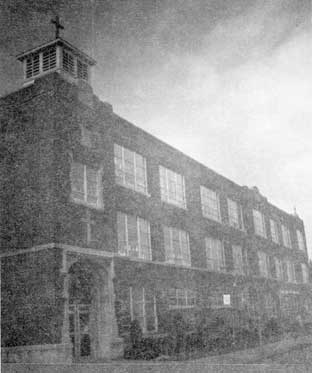
Special thanks for the Photo & Info to:
http://www.polishancestry.com/churches.htm
Current Google Sanborn Map of the church complex.
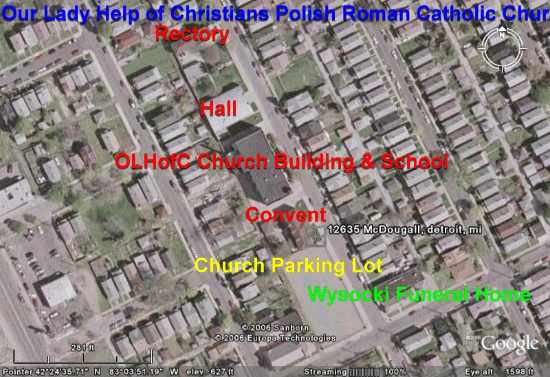
Livedog2's childhood and lifelong parish... |
Hornwrecker
Member
Username: Hornwrecker
Post Number: 1648
Registered: 04-2005
| | Posted on Wednesday, September 27, 2006 - 10:53 am: | |
While searching around google, I found this postcard(?) that was up for sale on ebay.
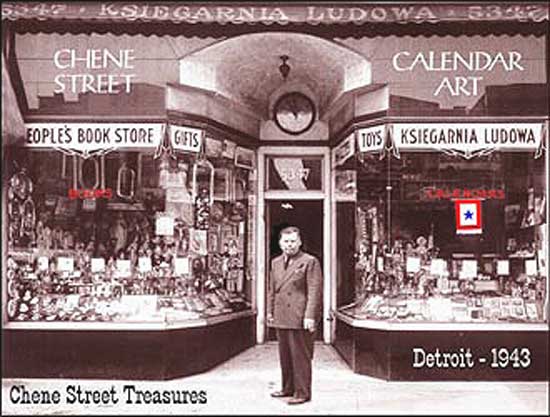
Address is 5347 Chene, name of the place is Ksiegarnia Ludowa, which translates as People's Bookstore.
(Message edited by Hornwrecker on September 27, 2006) |
Livedog2
Member
Username: Livedog2
Post Number: 1247
Registered: 03-2006
| | Posted on Wednesday, September 27, 2006 - 11:35 am: | |
Evidently by the date, 1943, the proprietor has someone in his/her family in the military, during WWII, by the Blue Star flag in the window just like this one for my two (2) sons!
Livedog2 |
Mauser765
Member
Username: Mauser765
Post Number: 1044
Registered: 01-2004
| | Posted on Wednesday, September 27, 2006 - 12:26 pm: | |
Holy Redeemer may not have been a Polish perish originally, but I know for a fact one of the primary artisans who painted the ceiling patterns and some of the mural work was a proud son of Poland ! |
Livedog2
Member
Username: Livedog2
Post Number: 1252
Registered: 03-2006
| | Posted on Wednesday, September 27, 2006 - 1:18 pm: | |
Yah, Mauser765!!! It doesn't matter 'cause we claim it as our own anyway!!!
Livedog2 |
Livedog2
Member
Username: Livedog2
Post Number: 1254
Registered: 03-2006
| | Posted on Wednesday, September 27, 2006 - 4:59 pm: | |
Does anyone remember a cloistered convent in Highland Park? I think it was on Hamilton but had to move after a few Nuns were raped my animals that got over the walls. Was it a Felician cloistered convent meaning it was Polish or maybe Carmelite Nuns? I use to go there with my father in the late 1940's and '50's once a month to take some nuns from our parish convent that use to visit there. I remember my father telling me that there were nuns that had been in there so long they had never seen a car and couldn't figure out what the noise from cars was that they were hearing.
Livedog2 |
Dbc
Member
Username: Dbc
Post Number: 1
Registered: 09-2006
| | Posted on Thursday, September 28, 2006 - 9:21 pm: | |
Hi all (first time poster, so be gentle)
Anyway, Help of Christians (OLHC) is my family's old parish. My father was an alter boy there in the 50's and went to grade school there, my great-uncle was an usher (his wife's family owned the Wysocki funeral home), my little sister was baptized there, and my great-grandmother (we called her great-babcia) walked there for Mass every day (we had her service at the funeral home and carried her casket across McDougall from the church).
I remember attending Mass with my grandfather (dziadzia) in the heat of summer (no AC in there), getting a stern look from him for playing with the hat-holders on the pews (they didn't have those in the 'burbs), and attending the Apple Festival (polkas, the adults drinking a lot of beer, czarnina (duck blood soup), and parlor games.) I went back a few years ago and had a great time, but the crowds were definitely smaller.
OLHC is still alive, but the school is closed (now a charter school) and there are only two Sunday Masses (one English, one Polish) and one on Saturday (English). (If memory serves me right, my Dad said they used to have four or five Sunday masses there, including one at 4AM!) I hope the parish lasts many more years, because it was once a very vibrant and proud little congregation. However, a lot of the parishioners have died or left the neighborhood, OLHC is to be clustered with Transfiguration (a larger parish about a half-mile to the east), and I’m not sure how many more years it will be before Fr. George retires. |
Livedog2
Member
Username: Livedog2
Post Number: 1256
Registered: 03-2006
| | Posted on Thursday, September 28, 2006 - 10:01 pm: | |
Welcome, Dbc! I was an altar boy there in the '50's, too. My grandfather was laid out and buried from Wysocki Funeral Home in August of 1953. It was the first family funeral I had ever been to. I had a number of "old" boyhood freinds and chums that went to Vietnam when I did that came back by way of Wysocki Funeral Home. I still correspond with Anthony Wysocki, Jr. the son of the original owner. He is retired up north these days.
You brought a smile to my face when you mentioned playing with the hat-holders on the pews because I did the same thing except I got more than a stern look from sister for doing that one too many times. My parents were married there and I made my 1st Holy Communion there, too.
The building combined the church on the main floor and the grade school in the upper floors. It was efficient and cost saving for the parishioners. It was what I thought a church was all about when I was growing up. Remember Saturday confessions and everyone trying to go to confession with the visiting Polish speaking priest that couldn’t understand as well as the English speaking ones. At least that was what we hoped
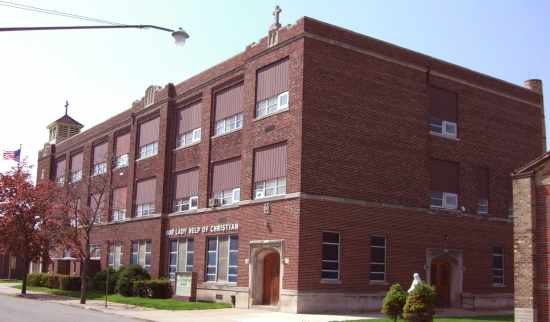
Livedog2 |
Livernoisyard
Member
Username: Livernoisyard
Post Number: 1512
Registered: 10-2004
| | Posted on Friday, September 29, 2006 - 7:50 am: | |
"Holy Redeemer may not have been a Polish perish originally, but I know for a fact one of the primary artisans who painted the ceiling patterns and some of the mural work was a proud son of Poland !"
Perish the thought! |
Livedog2
Member
Username: Livedog2
Post Number: 1258
Registered: 03-2006
| | Posted on Friday, September 29, 2006 - 9:32 am: | |
Reality certainly is hard at times!
Livedog2 |
Dbc
Member
Username: Dbc
Post Number: 2
Registered: 09-2006
| | Posted on Friday, September 29, 2006 - 11:27 am: | |
Small world Livedog2. Tony is good man and loves his jokes. (I saw him last year at a family funeral - no jokes there.) The next time you correspond with him, please tell him Wally’s son in DC gives him and his wife all the best.
As for OLHC, that parish evokes so many fond memories for me: my babcia and dziadzia's 50th wedding anniversary Mass and banquet, my aunt and family friends cooking in the auditorium kitchen at the Apple Festival, losing money at the games during the festival and running outside to beg for more while my family drank beer and danced to polkas. And I can still see my babcia on the front porch (they lived on the east side of Gallagher one house north of Lawley) drinking her iced tea and - later in the night - my dad, dziadzia, and cousins from the area doing shots of CC or VO and drinking beer on the porch.
I was in town for my sister’s wedding a couple weeks ago (she got married at St. Florian) and drove through the old neighborhood and past the parish and their old house. Sadly, the neighborhood doesn’t look the best. Although I’ve seen worse – like the neighborhood west of Campau – it’s still sad to see the graffiti and garbage. I found it ironic that the neighborhood was still nice in the 70’s and 80’s – when crime rates were way up in the city and downtown was dying – and now the reverse is true. That said, I will always love that neighborhood. |
Livedog2
Member
Username: Livedog2
Post Number: 1260
Registered: 03-2006
| | Posted on Sunday, October 01, 2006 - 12:30 pm: | |
Mashugruskie, Thank you for posting all that good information concerning Augusta Goike. There’s a thread called, “Final Resting Place of Famous Detroiters”. I encourage you to post the information concerning Augusta Goike nee Lesnau on this thread. I think she qualifies as Famous because of her status as the oldest living parishioner at the time of St. Albertus’ Centennial celebration back in 1973. If you have trouble doing it let me know and I’ll help you and if you’re not interested in doing the posting then if you send me the photos and info I’ll do it for you. It’s your call but let me know. Then I’ll post my email address for you.
Livedog2 |
Mauser765
Member
Username: Mauser765
Post Number: 1057
Registered: 01-2004
| | Posted on Sunday, October 01, 2006 - 1:49 pm: | |
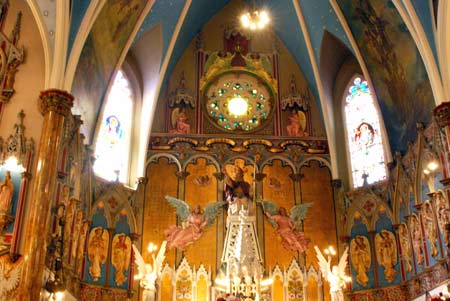
This mornings service at St Albertus !
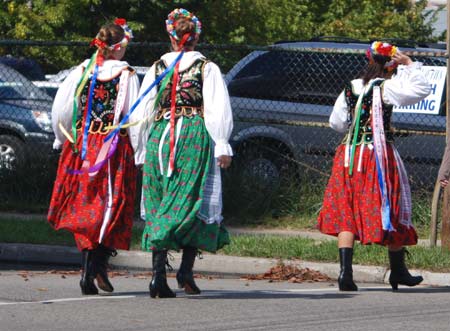
Gotta love the women and girls in their gorgeous traditional Polish outfits.
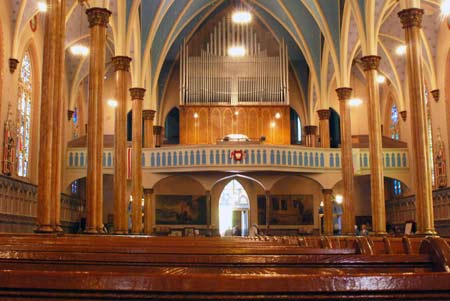
The organ and pipes
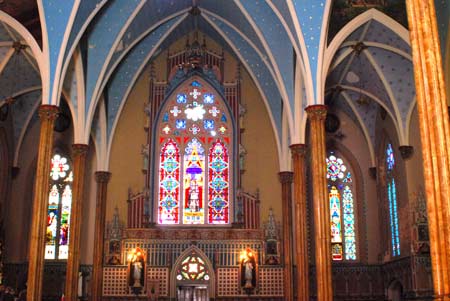
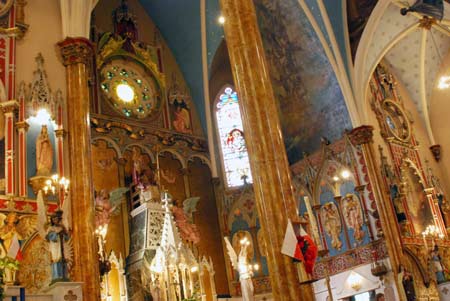
You were correct LD2 - this has to be one of the most beautiful sanctuarys in Detroit.
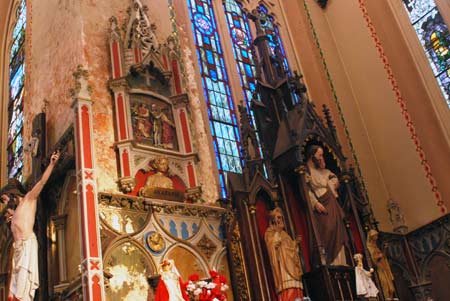
Yessss Livernois, "perish" sic. |
Hornwrecker
Member
Username: Hornwrecker
Post Number: 1652
Registered: 04-2005
| | Posted on Sunday, October 01, 2006 - 6:56 pm: | |
The 1910 Sanborn map of St Hyacinth, McDougall and Frederick.
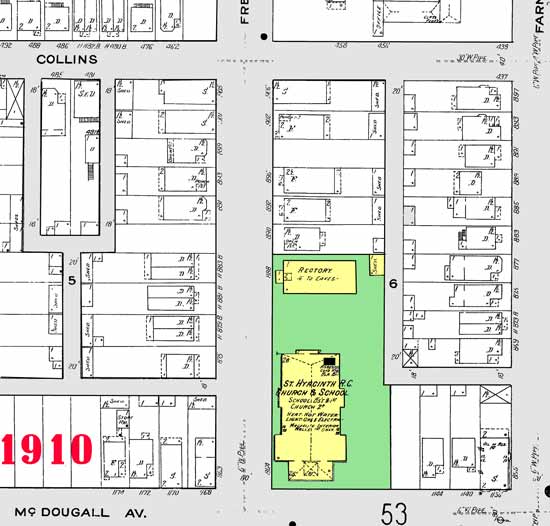
(Message edited by Hornwrecker on October 01, 2006) |
Livedog2
Member
Username: Livedog2
Post Number: 1261
Registered: 03-2006
| | Posted on Sunday, October 01, 2006 - 9:45 pm: | |
God Mauser765 your images of St. Albertus are magnificent!
Here's my humble contribution.
St. Albertus on right and rectory on the left.
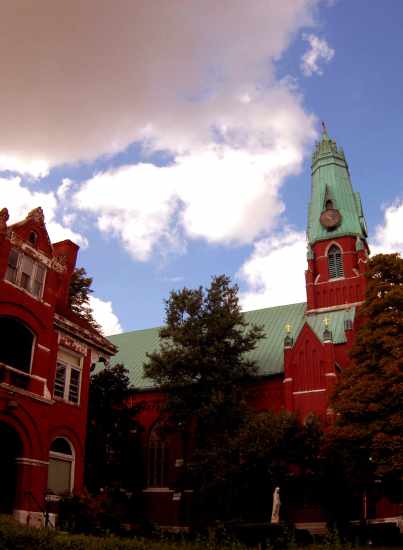
Beautiful ceiling.
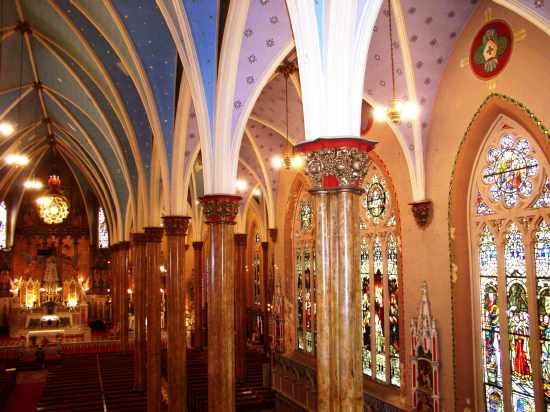
Magnificent Sanctuary.
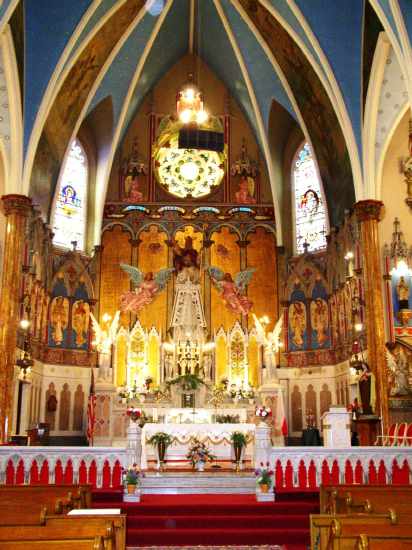
Livedog2 |
Livedog2
Member
Username: Livedog2
Post Number: 1264
Registered: 03-2006
| | Posted on Wednesday, October 04, 2006 - 10:35 pm: | |
Michigan State Fair, Saturday, September 2nd, 2006, 12:00 Noon, Family Grove, PRCUA (Polish Roman Catholic Union Assocition) Halka Dancers.
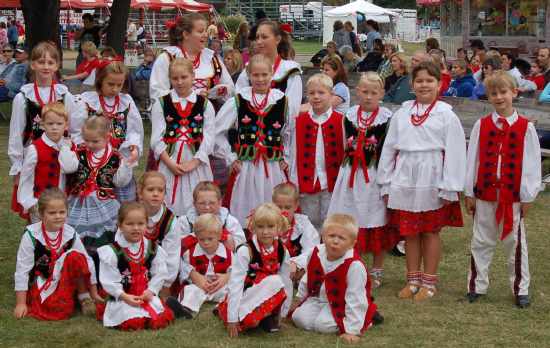
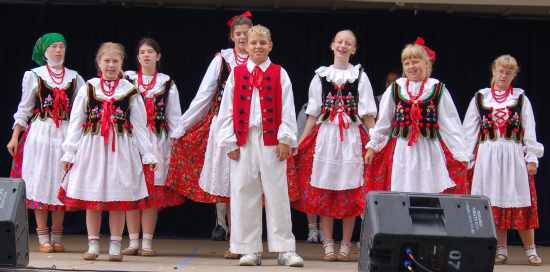
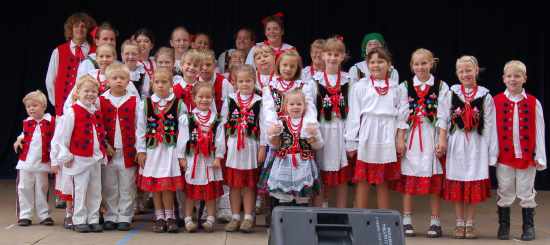
Livedog2 |
Mama_jackson
Member
Username: Mama_jackson
Post Number: 42
Registered: 06-2006
| | Posted on Thursday, October 05, 2006 - 9:53 am: | |
Love the original costumes! They are adorable! Wish I could have sene it! |
Livedog2
Member
Username: Livedog2
Post Number: 1265
Registered: 03-2006
| | Posted on Thursday, October 05, 2006 - 8:16 pm: | |
Here's an interesting little story.
Polish Folk Dancers at the Michigan State Fair in 2006.
Female Polish Folk Dancer at the Michigan State Fair in 1956 on the left and Male Polish Folk Dancer at the Michigan State Fair in 2006 on the right.
The Polish Folk Dancer on the right is the woman in photo above on left.
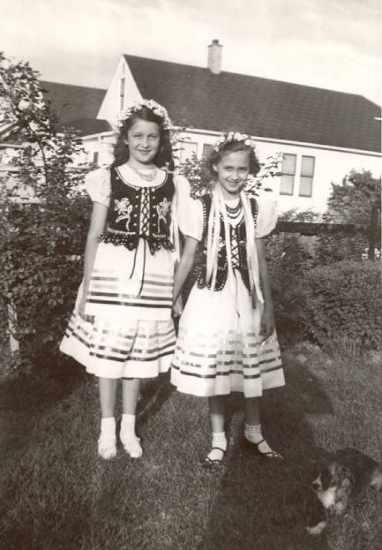
Polish Folk Dancers at the Eastside Dom Polski in 1960. Dark haired girl in middle is the same woman that is in the 2nd photo above.
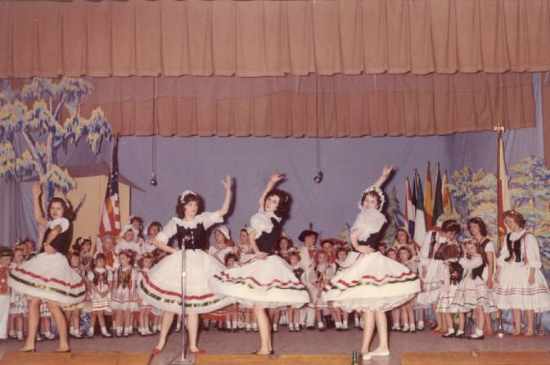
Polish Folk Dancers with Felician Nuns at Queen of Apostles Polish Roman Catholic Church in Hamtramck. The girl 2nd from left sitting down is the same woman that is in the 2nd photo above.
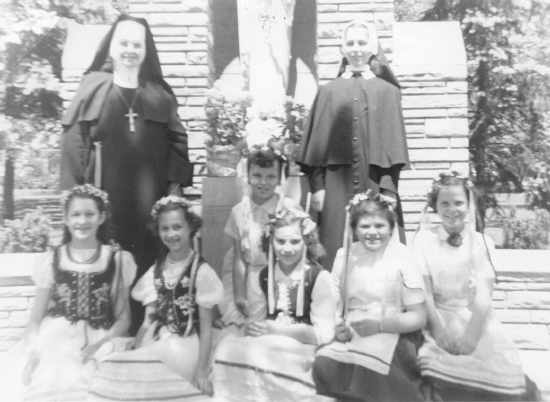
Polish Folk Dancers at the Michigan State Fair in 2006.
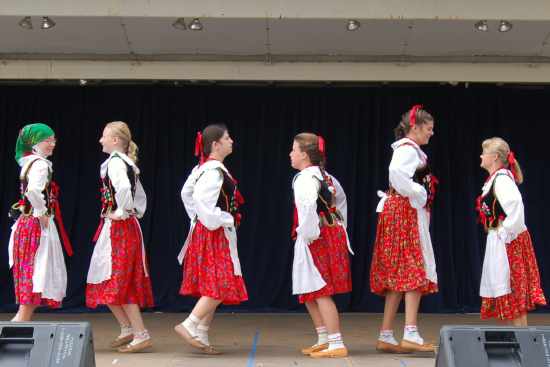
Livedog2 |
Livedog2
Member
Username: Livedog2
Post Number: 1266
Registered: 03-2006
| | Posted on Thursday, October 05, 2006 - 9:34 pm: | |
I need a little help with this one. I've run into a mental block on this one. I believe this building is/was on the NE corner of either Bloom or Buffalo and McNichols kind of caddycorner from the Sunnyside Bakery. If someone knows the exact location of where it is/was, what the building was and if they have an old photo of the building in its heyday. I zoomed into the obvious Polish Eagle on the crown of the building and was shocked to see it says, "Dom Polski". I am aware of the Eastside Dom Polski located on Forest and Chene and the Westside Dom Polski on Junction and Michigan but this is a new one on me. Can someone enlighten me about this building. May Hornwrecker can see what the Sanborn maps say about this building if we can identify the exact location.
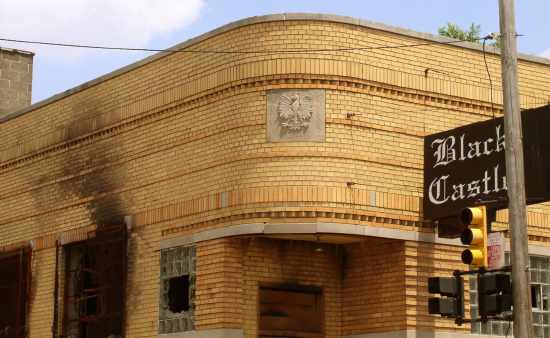
Polish Eagle with the Dom Polski date of 1948. Yikes, I'm older than this building!!!
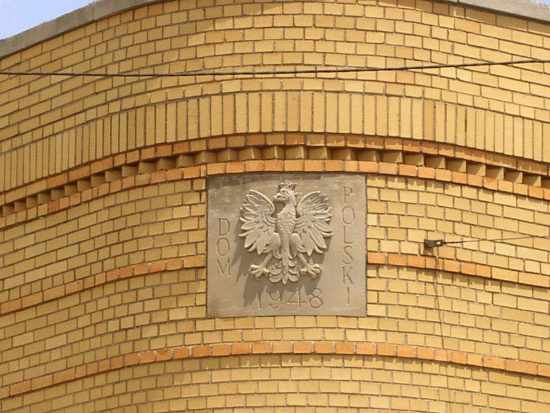
Livedog2 |
Kathleen
Member
Username: Kathleen
Post Number: 1617
Registered: 10-2003
| | Posted on Thursday, October 05, 2006 - 10:25 pm: | |
A Google search reveals the address as 5550 E. McNichols between Buffalo and Caldwell. It was the home of the NORTH DETROIT DOM POLSKI ASSN. It was registered as a nonprofit organization as late as 1988.
Hopefully this info will elicit some details or memories of this Dom Polski! |
Stephanie
Member
Username: Stephanie
Post Number: 10
Registered: 06-2006
| | Posted on Thursday, October 05, 2006 - 10:47 pm: | |
It was a Dom Polski for years and years. I remember many wedding receptions, baby showers, retirement parties, etc being held there. My aunt was a bartender there for a short time in the '80s. There used to be restaurant on the other side of the street called Jack 'N Jill's that my family used to go to when I was a kid in the '70s. If memory serves, there was also a Dom Polski on Conant between Six Mile and Nevada, but that was many, many moons ago so I could be wrong about that...
It's sad to see what's become of the old neighborhood. |
Hornwrecker
Member
Username: Hornwrecker
Post Number: 1661
Registered: 04-2005
| | Posted on Thursday, October 05, 2006 - 10:54 pm: | |
The building looks like it was designed and built by same people who did the Polish Falcons, Nest 86, on Caniff and Klinger. |
Livedog2
Member
Username: Livedog2
Post Number: 1267
Registered: 03-2006
| | Posted on Friday, October 06, 2006 - 12:05 am: | |
Stephanie, I remember the Jack 'N Jill's Restaurant from many years ago. It use to be a thriving neighborhood and the Sunnyside Bakery was one of the best. It is still in business and the baked goods are still the best but the help really sucks. Much of the clientle makes me want to either scratch myself all the while I am around them or count my fingers all the time!
Now, you said,
quote:there was also a Dom Polski on Conant between Six Mile and Nevada, but that was many, many moons ago so I could be wrong about that...
I'm wracking my brain but I don't remember there being a Dom Polski there. That doesn't mean there wasn't one it just means I don't remember one. Do you remember in more detail where it was located on Conant? Or, does anyone else remember this Dom Polski location? And, if so is the building still there because if so it needs to be recorded for this thread?
I had a Detroit Times paper route in 1956 and the station I use to pick-up my papers from was on Conley St. just off of McNichols on the west side of the street in an old abandoned storefront.
Livedog2 |
Stephanie
Member
Username: Stephanie
Post Number: 11
Registered: 06-2006
| | Posted on Friday, October 06, 2006 - 1:23 am: | |
Livedog, I'm going to be making a trip to Polonia(for a plate of city chicken!) sometime this weekend, so I'll be sure to drive by there to see if I can find the building I'm thinking of. One of the other businesses I remember was a fruit market right there on the corner, and the Turtle Soup Inn was a block or two east of that. |
Livedog2
Member
Username: Livedog2
Post Number: 1268
Registered: 03-2006
| | Posted on Friday, October 06, 2006 - 11:10 am: | |
Thank you for the info about the, "NORTH DETROIT DOM POLSKI ASSN", Kathleen. I wasn't aware of the fact that it was a Dom Polski. As I said I was a aware of the Dom Polski on Forest and for me that was the only one that existed even though I knew there was one on the Westside, too. Being so associated with the "old" Eastside Polonia I didn't go very far afield.
Stephanie, I know that whole area that you are talking about. That neighborhood was my playground when I was a kid. I knew the owners of the Turtle Soup Inn and remember when their son stuck his head out of the window above the Turtle Soup Inn and blew his brains out with a shotgun back in the early 1960's. Sad, vary sad!
I even have one of their old business cards.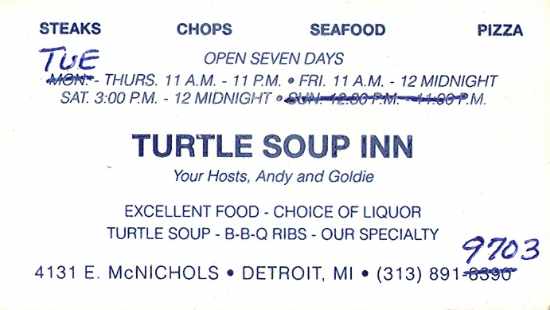
Stephanie, I think the fruit market you are talking about was on the NE corner of Conant and 6 Mile or McNichols for those that are uninitiated :-) and it was called Paul's Market. My kid brother worked there back in the late 1960's. Then there was Buddy's Rendezvous on the NW corner and directly across the street on Conant was a bar that had dancing on the weekend. I can't remember the name of it right now. But, I am going to be keenly interested in your weekend reconnoiter of the neighborhood for that other Dom Polski you mentioned. If you have a digital camera take a picture and post it if you can.
Livedog2 |
Livedog2
Member
Username: Livedog2
Post Number: 1270
Registered: 03-2006
| | Posted on Saturday, October 07, 2006 - 8:55 am: | |
I received this email today
quote:OLHOFC (Our Lady Help of Christians Catholic Church) is closing this October Last Mass the 20th and is being sold to the Islamic Church of North Detroit
Can anyone either confirm or deny this fact? I would appreciate any information related to this matter.
Livedog2 |
Kathleen
Member
Username: Kathleen
Post Number: 1620
Registered: 10-2003
| | Posted on Saturday, October 07, 2006 - 10:04 am: | |
It was reported earlier this year that Our Lady Help of Christians was to be clustered with Transfiguration and that plans would be announced by the end of the year. I didn't see any further details.
http://www.cardinalrating.com/ cardinal_57__article_3544.htm
I'd call the Rectory for details. |
Livedog2
Member
Username: Livedog2
Post Number: 1272
Registered: 03-2006
| | Posted on Saturday, October 07, 2006 - 11:13 am: | |
Thanks for the info, Kathleen. I did call the rectory but no answer. He's proly over at Transfiguration right now!
The problem we have is that people that are far removed from the local situation like some "red hat" cardinal that's proly never even been in these churches is making decisions about local matters based on money! That's why my grandfather on my mother's side that was born in Assisi, Italy turned away from the church and never came back.
Besides, God doesn't live in those churches anyway! It's just our humanity that makes our childhood experiences so important to us that make us want to venerate these places. I am definitely one of those with lots of humanity!
Livedog2 |
Dbc
Member
Username: Dbc
Post Number: 3
Registered: 09-2006
| | Posted on Saturday, October 07, 2006 - 12:26 pm: | |
Livedog2,
My cousin told me that OLHC was closing at my sister's wedding last month. (He grew up on Meade, was an altar boy there, and is Tony's nephew.) I didn't want to say anything on the forum in the hopes that there would be an eleventh hour reprieve. The less bad news - there really is no "good" news concerning the closure - is that, according to my cousin, Father George was able to find a church in Poland that will take all of the religious items from the church. I don't know where in Poland that will be, so if you find out please let us know.
It's truly a shame that it is closing, but all of us that went to the church and visited its buildings and festival will have great memories. Do widzenia OLHC. |
Livedog2
Member
Username: Livedog2
Post Number: 1274
Registered: 03-2006
| | Posted on Saturday, October 07, 2006 - 3:10 pm: | |
Thanks for the info, Dbc. I have another engagement in Philadelpia starting this Thursday, October 12th that I have to attend. But, some how I'm going to have to figure out a time and way to get to OLHofC in the early part of the week to photograph the inside of the church. I've got a call into the rectory but no answer, yet. But, with the weekend they're no doubt busy. So, I'll keep trying.
By the way Dbc I was an altar boy there in the early to mid 1950's, my paternal grandfather was buried from Wysocki Funeral Home and I lived on Dearing St. in the late 1940's. So, I have deep roots in that neighborhood. No doubt I knew your cousin if we are contemporaries. Does Zentarski mean anything to you?
Livedog2 |
Jasia
Member
Username: Jasia
Post Number: 10
Registered: 09-2006
| | Posted on Saturday, October 07, 2006 - 10:31 pm: | |
Details about the OLHC closing Mass and banquet at http://creativegene.blogspot.c om
(Message edited by Jasia on October 07, 2006) |
Detroitej72
Member
Username: Detroitej72
Post Number: 329
Registered: 05-2006
| | Posted on Saturday, October 07, 2006 - 11:18 pm: | |
quote:
Besides, God doesn't live in those churches anyway! It's just our humanity that makes our childhood experiences so important to us that make us want to venerate these places. I am definitely one of those with lots of humanity!
______________________________ ___________________
Livedog2, It is Such a SAD DAY, in MY heart whenever a Catholic Church closes, even sadder when it's a Polish Catholic church in Detroit.
I can still recall the day in 1989 when it was announced that St. Thomas at Miller and Baldwin was schedualed for closer. This was where my mom went to school for all 12 grades, my parent's were married, and my baby sis and I were baptised there.
I think about how I hope that this will NEVER happen to my current parish, St. Josephat's, as I sit at mass on Sundays.
Such a SAD DAY for Detroit's Polonia Community.
BTW, Aren't all Catholic Church venerated, at least with the Saint's Relic?
Detroitej72 |
Detroitej72
Member
Username: Detroitej72
Post Number: 330
Registered: 05-2006
| | Posted on Saturday, October 07, 2006 - 11:23 pm: | |
BTW Livedog, I fondly remember going to Turtle Soup Inn on Friday's for their 'famous' pizza, which was always very tasty.
When I was about 13 or 14, I remember telling the waitress I thuoght she was cute. She smiled and told me she was very much too old for me, all of 21!!!
Detroitej72 |
Livedog2
Member
Username: Livedog2
Post Number: 1275
Registered: 03-2006
| | Posted on Sunday, October 08, 2006 - 2:18 pm: | |
Good stories, Detroitej72! Thanks for sharing your remembrances.
Livedog2 |
Hornwrecker
Member
Username: Hornwrecker
Post Number: 1669
Registered: 04-2005
| | Posted on Sunday, October 08, 2006 - 8:49 pm: | |
I've been looking into the cigar factories that were in the Eastside area. It's going to take some more digging, but here is some of what I've found so far.
From the Freep's Detroit Almanac:
Detroit Almanac: Cigar factories
Detroit was one of the nation's most important cigar-making centers from the 1870s to World War II. At first, the employees were mostly German, but by the turn of the century, they were primarily young Polish women who mostly made cigars by hand.
By 1908, companies such as Mazer, Alexander Gordon, San Telmo and William Tegge operated factories in a near east side Polish neighborhood.
Employers lured prospective employees with such perks as cafeterias and dressing rooms. One factory had a piano player entertain during lunch. In some factories, the workers would choose a colleague to read from a book while the others rolled .
In 1900, wages ranged from 77 to 90 cents a day, though men earned almost twice as much. Employees worked an average of nine to 11 hours a day.
A couple of Mazer Cigar Co pictures that I've found on the web, they were located on 5031 Grandy & Theodore.
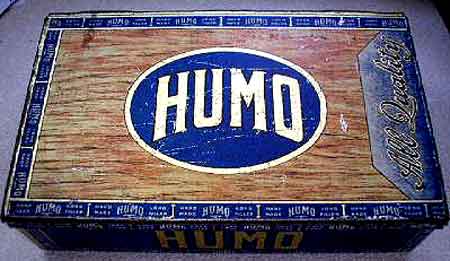
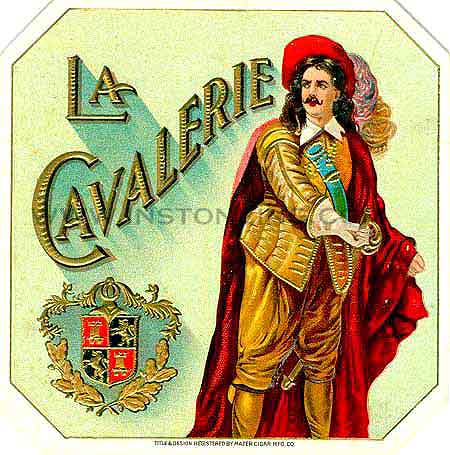
(Message edited by Hornwrecker on October 08, 2006) |
Livedog2
Member
Username: Livedog2
Post Number: 1276
Registered: 03-2006
| | Posted on Sunday, October 08, 2006 - 10:28 pm: | |
Great stuff, Hornwrecker! This is a whole another dimension to the Polish neighborhood and community. I remember hearing that the cigar business was one of the biggest businesses in Detroit before the Auto Industry.
Livedog2 |
Livedog2
Member
Username: Livedog2
Post Number: 1277
Registered: 03-2006
| | Posted on Tuesday, October 10, 2006 - 8:12 am: | |
This sign has a limited life. And, the truth is that everything under the sun has a limited life. In the birth of everything are the seeds of death!
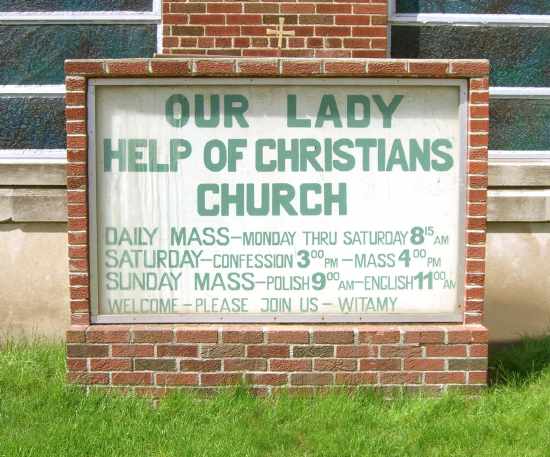
Livedog2 |
Hornwrecker
Member
Username: Hornwrecker
Post Number: 1676
Registered: 04-2005
| | Posted on Tuesday, October 10, 2006 - 9:07 pm: | |
The San Telmo Cigar Mfg Co on 1966 E. Forest, from 1921 Sanborn map. I'm not sure if the buildings at St. Aubin and Forest are part of it, as one is labeled as vacant, and the other is tobacco warehouse.
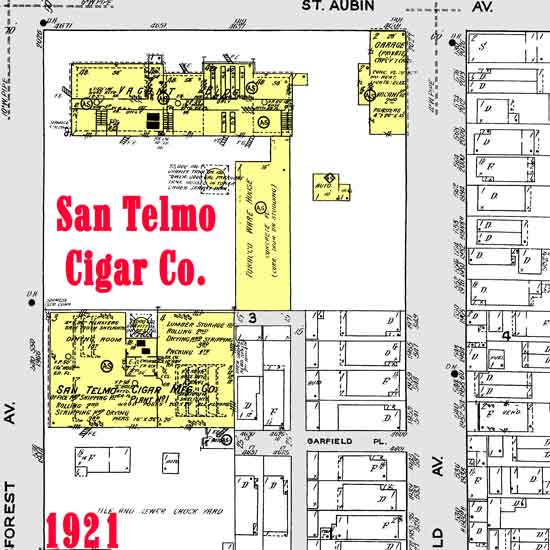
An image of the San Telmo factory from a cigar tin, not sure if this is the same building, or an idealized rendering of it. It does have three stories like the one on the map. I haven't searched yet, to see if they had another location in Detroit at that time.

So far, that's all I can find on this factory, but it must have been a pretty large employer in this Polish neighborhood.
 |
Livedog2
Member
Username: Livedog2
Post Number: 1278
Registered: 03-2006
| | Posted on Tuesday, October 10, 2006 - 10:59 pm: | |
Great stuff, Hornwrecker! I'm on a photographic expedition of the Detroit Polonia for this thread. Stay tuned for forthcoming images!!
Our Lady Help of Christians Polish Roman Catholic Church Hall
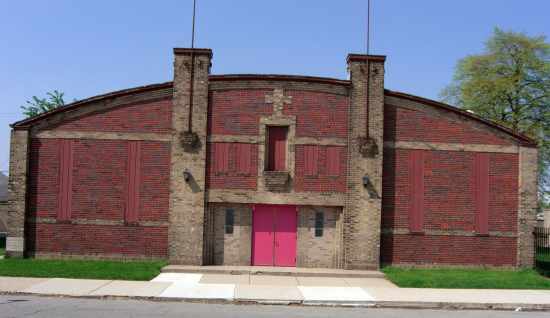
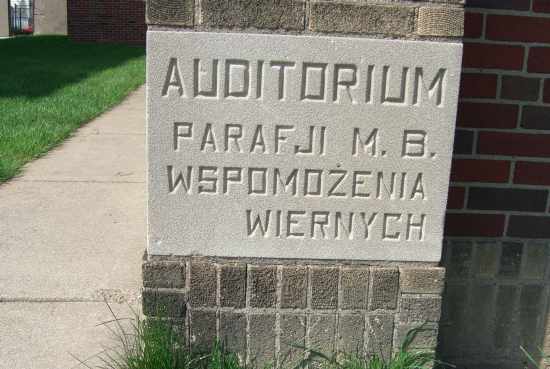
Livedog2 |
Livedog2
Member
Username: Livedog2
Post Number: 1279
Registered: 03-2006
| | Posted on Friday, October 13, 2006 - 8:09 am: | |
Hey Hornwrecker, If you get a chance can you do a Sanborn map for Our Lady Help of Christians Catholic Church and post it here. I can view them but I still haven't figured out how to cut and paste them on DY. Thanks.
Livedog2 |
Hornwrecker
Member
Username: Hornwrecker
Post Number: 1677
Registered: 04-2005
| | Posted on Saturday, October 14, 2006 - 10:53 am: | |
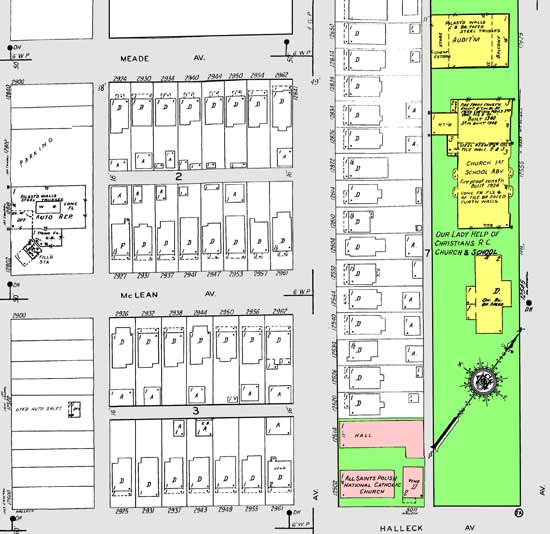
There you go, it took quite a bit of redrawing the lines, so that color could be added.
The All Saints Polish National Catholic church was right next to it, whatever that was. Any ideas? |
Livedog2
Member
Username: Livedog2
Post Number: 1280
Registered: 03-2006
| | Posted on Saturday, October 14, 2006 - 6:16 pm: | |
Thanks for the effort Hornwrecker and it's funny you should bring up All Saints Polish National Catholic Church. I did some heavy duty photography at Our Lady Help of Christians last Thursday which included some very interesting information concerning All Saints Polish National Catholic Church along with some rare photos. The only problem is I am writing from Gettysburg, PA because I am on an extended photo shot of a number of events and locations. But, when I get home I will download my photos and get my thoughts together on some very interesting doings related to this thread. Sorry to be so mysterious and non-specific but I am really stretched to the limit on these projects. But, thanks again for the Sanborn of OLHofC, Hornwrecker. It is much appreciated!
Livedog2 stretching the rubberband... |
Livedog2
Member
Username: Livedog2
Post Number: 1281
Registered: 03-2006
| | Posted on Saturday, October 14, 2006 - 6:22 pm: | |
P.S. What year is that Sanborn map for of Our Lady Help of Christians, Hornwrecker? I looked again but couldn't find it or maybe the date is just too small for these old eyes to see! :-)
Livedog2 |
Hornwrecker
Member
Username: Hornwrecker
Post Number: 1678
Registered: 04-2005
| | Posted on Sunday, October 15, 2006 - 8:22 pm: | |
The date on the map index is 1949, revision of the whatever revision of the original 1915 one.
The date on the church building says 1924; north addition to it built 1940, third floor of that in 1948 |
Livedog2
Member
Username: Livedog2
Post Number: 1282
Registered: 03-2006
| | Posted on Tuesday, October 17, 2006 - 11:11 pm: | |
Back and getting my photos ready to post!
Livedog2 |
Livedog2
Member
Username: Livedog2
Post Number: 1283
Registered: 03-2006
| | Posted on Wednesday, October 18, 2006 - 9:44 pm: | |
Polish Reading Club, 1456 Junction, this building antedating to 1917 was the site of the Polish Reading Club.
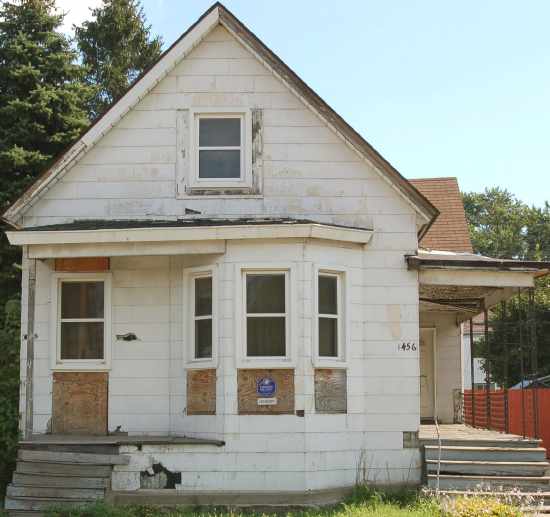
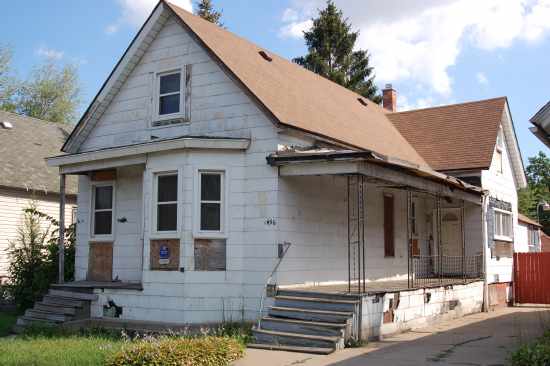
Livedog2 |
Detroitej72
Member
Username: Detroitej72
Post Number: 367
Registered: 05-2006
| | Posted on Wednesday, October 18, 2006 - 11:55 pm: | |
Hey Livedog, do you remember the Famous Bar-B-Q on Chene Street north of I-94, where the GM Poletown plant is now? How about the old Chene-Trombly Market? And also, any memories of St. Stanislaous.
Would love to hear more stories from our forefather's old "stomping grounds"!
Detroitej72 |
Livedog2
Member
Username: Livedog2
Post Number: 1284
Registered: 03-2006
| | Posted on Thursday, October 19, 2006 - 8:57 am: | |
Great questions and comments, Detroitej72! I'm just heading out the door to Valley Forge, PA to the Medal of Honor Grove for the Memorial Service this Saturday, October 21st for Sister Maria Veronica. She was the Archivist for the Medal of Honor Society for many years and greatly loved by all. When I get back I'll answer and comment on your post. Best wishes for your support of this great thread! See you on the other end!!
Livedog2 |
Hornwrecker
Member
Username: Hornwrecker
Post Number: 1683
Registered: 04-2005
| | Posted on Thursday, October 19, 2006 - 11:25 am: | |
The Chene-Trombley Market in its old location.
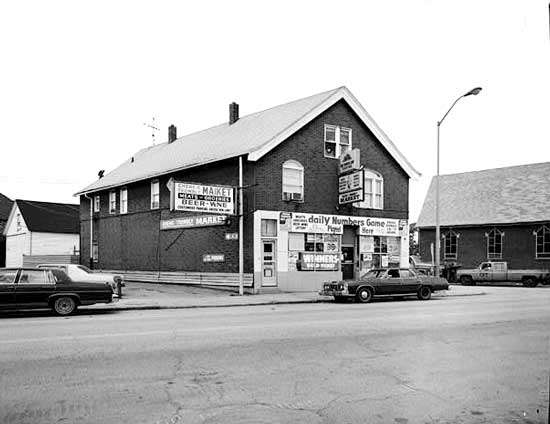 |
Danny
Member
Username: Danny
Post Number: 5092
Registered: 02-2004
| | Posted on Thursday, October 19, 2006 - 11:39 am: | |
świetna rzecz Ten nitka około stary Polonez w Detroit Wschód Strona jest wielki. Nie wobec nadmieniony około inny Polski wspólnota w Detroit Południowo-zachodni i Warrendale Wspólnota , także. |
Danny
Member
Username: Danny
Post Number: 5093
Registered: 02-2004
| | Posted on Thursday, October 19, 2006 - 11:44 am: | |
Hornwrecker,
Jak dużo lata zrobił ów polski był u Chene Ulica?
Livedog2,
JA miłość ono podczas ty wyrażać ów fotografie od ten stary Detroit Polonez wspólnoty.
I love taking Polish. |
Kathleen
Member
Username: Kathleen
Post Number: 1648
Registered: 10-2003
| | Posted on Saturday, October 21, 2006 - 8:58 am: | |
Polish Village serves up tradition in Hamtramck
Review by Molly Abraham, Detroit News:
}If you happened to run across an old menu from the Polish Village Cafe, say from a dozen years ago or more, you'll find the prices remarkably similar to those on the menu today.
The Polish platter -- stuffed cabbage, pierogi, kielbasa, sauerkraut and mashed potatoes with gravy -- was $5.25 in the early '90s. It's now $6.75, and a glass of wine to accompany it is $3, typifying the price structure at this Hamtramck standby.
Walk down a few steps from the sidewalk into a quaint vintage rathskeller setting. The little structure with a colorful folk mural painted on the side was built in 1925 as a 31-room hotel with a beer garden in the cellar, for the tradesmen and merchants coming to the city of Hamtramck.
The cellar became a restaurant in 1976, and it was known as Zosia's for the head cook who turned out the city chicken, boiled ribs, meatballs and mushroom cutlets. ..."
http://detnews.com/apps/pbcs.d ll/article?AID=/20061020/OPINI ON03/610200414/1042/LIFESTYLE0 5 |
Livedog2
Member
Username: Livedog2
Post Number: 1285
Registered: 03-2006
| | Posted on Monday, October 23, 2006 - 4:38 pm: | |
Saturday, October 07, 2006
Our Lady Help of Christians Parish will close
From Sweetest Heart of Mary Church Bulletin of Sunday, October 8, 2006:
After Eighty-Three years of active ministry within the Archdiocese of Detroit, Our Lady Help of Christians Parish will close her doors and merge with Transfiguration Parish to form one Parish family. Please accept our invitations to offer a Concelebrated Mass of Thanksgiving on Sunday, October 29th at 1:30 o'clock at Our Lady Help of Christians Church - and - later that afternoon, to join us at The Barrister House, 21810 Harper Avenue at Eight and Half Mile Road at 4:00 o'clock for a Memory Banquet. To be prepared, we ask the courtesy of a response no later than October 15. Current registered parishioners will receive Complimentary Dinner Tickets. Dinner tickets for other guests will be sent upon receipt of $25.00 per guest (make checks payable to O L H C Parish). Members of Transfiguration and St. Ladislaus Parishes are also invited to attend the Mass of Thanksgiving and the Memory Banquet - dinner tickets may be reserved by calling M. Kijek at 1 313 891-6459.
It's always a sad day when a Catholic church closes. This one will be sorely missed by Detroit's Polish community.
From Creative Gene
I just wanted to be sure that everyone that was interested had this information.
Livedog2 back from his travels... |
Dtown1
Member
Username: Dtown1
Post Number: 296
Registered: 08-2006
| | Posted on Monday, October 23, 2006 - 4:48 pm: | |
So..... looking at these pictures, the lower class ghettos we call them in this day and age was at one time bustling, lively areas for Detroit early middle class white folks? |
Danny
Member
Username: Danny
Post Number: 5094
Registered: 02-2004
| | Posted on Monday, October 23, 2006 - 5:52 pm: | |
When White folks leave Detroit. They would leave their historic churches behind, too and replaced it with black baptist churches. |
Horn_wrecker
Moderator
Username: Horn_wrecker
Post Number: 12
Registered: 08-2006
| | Posted on Monday, October 23, 2006 - 7:33 pm: | |
This is a map from census data, no later than 1950, showing the percent of Polish foreign born, in various plots of Detroit. The lined plots are 5-10%, and the darker shaded areas are above 10%.
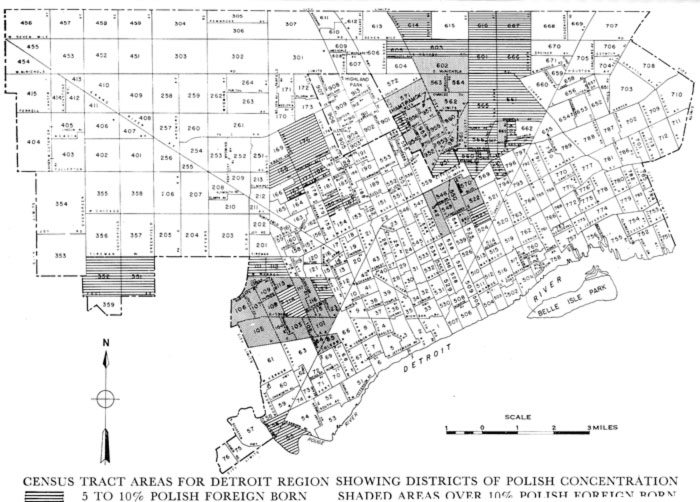
I'll post some enlargements of areas later. |
Horn_wrecker
Moderator
Username: Horn_wrecker
Post Number: 13
Registered: 08-2006
| | Posted on Monday, October 23, 2006 - 8:08 pm: | |
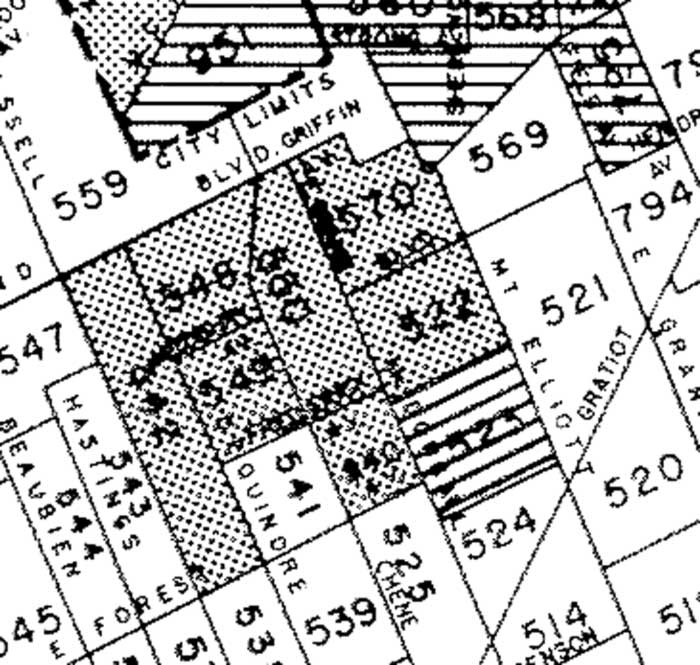
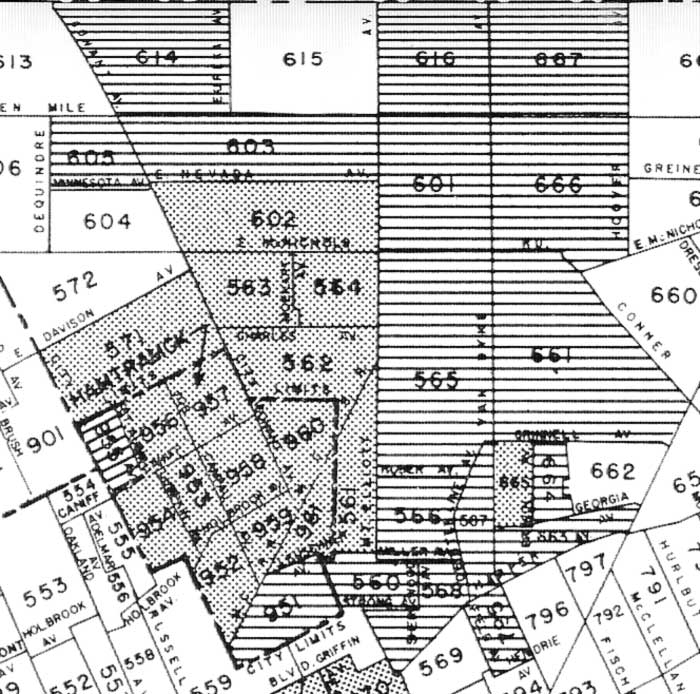
 |
Livedog2
Member
Username: Livedog2
Post Number: 1286
Registered: 03-2006
| | Posted on Wednesday, October 25, 2006 - 4:12 pm: | |
Close-up, wide angle view of St. Stanislaus Polish Roman Catholic Church on Medbury just off of Chene.
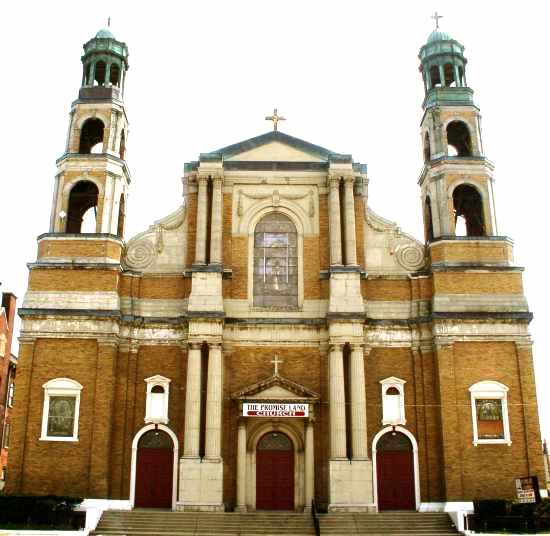
Now, it's called The Promise Land Church.
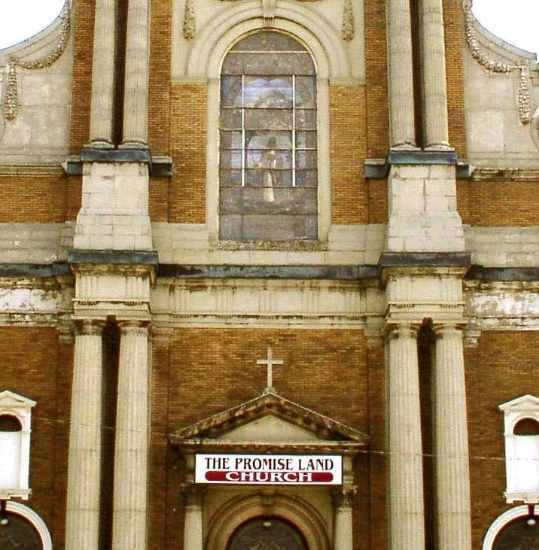
Livedog2 |
Livedog2
Member
Username: Livedog2
Post Number: 1292
Registered: 03-2006
| | Posted on Thursday, October 26, 2006 - 12:05 pm: | |
Since I found out that my childhood parish was closing down and conducting the final mass on October 29, 2006 at 1:30 P.M. I decided to go down there and do as much photographing as I can because it will all be gone soon. I went into every knuck and cranny of the church and all its environs.
One of the prizes I found was a Sodality (For the uninitiated this is a Roman Catholic lay society that is run as a charity or a religious fellowship.) pendant or banner or flag from 1921, which is 2 years before the official building of the current church, tucked away in a dark, old closet.
Reverse
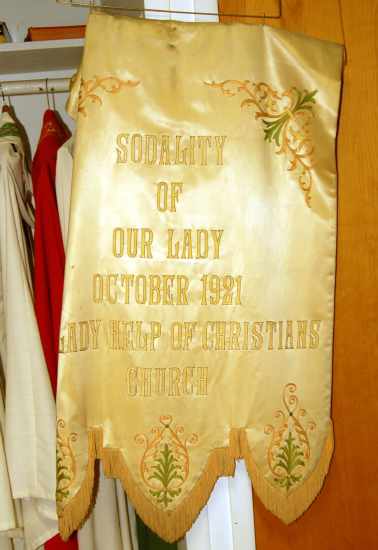
Obverse
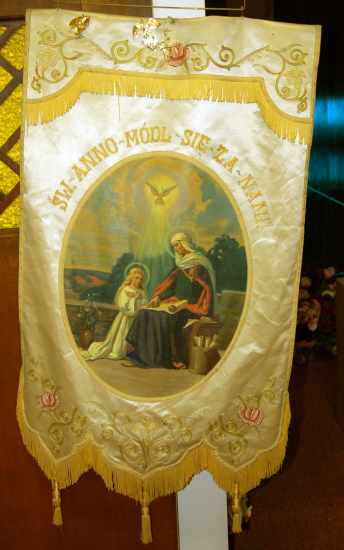
I can remember as a child marching in May Day Parades where people carried these banners in the procession to the statue of the Virgin Mother Mary.
Livedog2 |
Livedog2
Member
Username: Livedog2
Post Number: 1294
Registered: 03-2006
| | Posted on Thursday, October 26, 2006 - 7:30 pm: | |
This is a very fine Polish Restaurant and it’s located in the Polish Corridor of Detroit.
Come on guys don't lose interest now because we've only just begun!
Livedog |
Karenka
Member
Username: Karenka
Post Number: 5
Registered: 01-2006
| | Posted on Thursday, October 26, 2006 - 10:59 pm: | |
Pews from St. Stan's are being auctioned on ebay:
http://cgi.ebay.com/ws/eBayISA PI.dll?ViewItem&item=180042463 346&ssPageName=MERC_VIC_ReBay_ Pr3_PcY_BID_IT&refitem=1800417 58287&itemcount=3&refwidgetloc =closed_view_item&usedrule1=Ca tegoryProximity&refwidgettype= cross_promot_widget |
Dbc
Member
Username: Dbc
Post Number: 5
Registered: 09-2006
| | Posted on Friday, October 27, 2006 - 12:33 am: | |
Livedog2, any way you can post the pictures?
Also, enjoy the last Mass. I am unfortunately going to miss it, but my aunts and parents will be there. |
Kathleen
Member
Username: Kathleen
Post Number: 1658
Registered: 10-2003
| | Posted on Friday, October 27, 2006 - 5:03 am: | |
Our Lady Help of Christians church complex is being sold to the Islamic Center of North Detroit, according to this Detroit News article: http://www.detnews.com/apps/pb cs.dll/article?AID=/20061027/L IFESTYLE04/610270380/1003/METR O
(Message edited by Kathleen on October 27, 2006) |
Kathleen
Member
Username: Kathleen
Post Number: 1662
Registered: 10-2003
| | Posted on Saturday, October 28, 2006 - 7:20 pm: | |
Hamtramck: An Illustrated History: Mural honors heritage
"Barbara Ann Dillon smiled Thursday as she scanned the hand-painted ceiling border that depicts the beloved movie theaters of her childhood.
"This really brings back memories," the lifelong Hamtramck resident said.
Dillon, 75, visited the H.I. Mayson-Hamtramck Neighborhood Center to see the "History of Hamtramck" mural, which has been in the works for about seven years. The 164-foot mural, painted by Denby High School art teacher Dennis Orlowski and youth artists, was dedicated Thursday.
The sprawling $17,000 work captures the evolution of the community from its establishment as a township in 1798 to its birth as a city in 1922. Funded by grants, it features people concocting bathtub gin during the Depression, children dancing the Charleston and the Women's Meat Strike of 1935, when Polish and black housewives picketed butcher shops to end price gouging in black neighborhoods.
..."
http://www.detnews.com/apps/pb cs.dll/article?AID=/20061027/M ETRO01/610270386/1006 |
23smytiger
Member
Username: 23smytiger
Post Number: 1
Registered: 10-2006
| | Posted on Friday, November 10, 2006 - 6:21 am: | |
Thank you. I enjoyed reading thus. Perhaps one day I can add to it. I love the maps. And I do happen to be reading the "Kolasinski Affair", right now.
My grandfather Frank Romanowski owned the land that the Chene-Ferry Market was built on. For what that's worth. Lynn Najduk Mills |
Kathleen
Member
Username: Kathleen
Post Number: 1699
Registered: 10-2003
| | Posted on Sunday, November 19, 2006 - 8:54 am: | |
Follow up to the closing of Our Lady Help of Christians...
A Polish circle of faith: Local parish helps old country church with donation of its furniture and artifacts
"This week, members of one of Detroit's most beloved Catholic parishes are moving their church to a new location, though they admit that commuting to the new site will be tough.
That's because the church is 4,405 miles away ... in Poland.
Two weeks ago, parishioners at Our Lady Help of Christians, an 83-year-old Polish church near Hamtramck, dismantled their pews, altar and stained-glass windows. Carefully they packed their sacred vessels, statues of saints and a long list of other materials into padded crates. Then, they loaded it all into a steel shipping container for a voyage to many of the parishioners' homeland.
"This will be our Christmas gift from the Polish people of Detroit," the Rev. Slawek Pettke, the pastor of Our Lady of Fatima Catholic Church in Wloclawek, Poland, said as he helped pack the crates. Soon, he will fly home, but the container will travel via ship and won't reach Wloclawek (pronounced vlaht-SLAH-veck) until mid-December, he said. ...."
Full story at: http://www.freep.com/apps/pbcs .dll/article?AID=/20061118/FEA TURES01/611180329/1026 |
Birmingham22
Member
Username: Birmingham22
Post Number: 2
Registered: 11-2006
| | Posted on Saturday, November 25, 2006 - 2:53 pm: | |
Hello Mashugruskie,
I am doing some family history research for my brother-in-law, Jim Jablonski – he is married to my wife’s sister. The Jablonskis say that their ancestors were from the Ukraine and the name was originally spelled Yablonsky. But I am interested in your Goikes, Kotlowskis, Budniks, and Krefts – which are names from his Mom’s side of the family.
His mother is not quite 74 and her maiden name is Delphine Tosch.
Her parents were Joseph Tosch (1901 Michigan - 1976 Michigan) & Clara Budnik (1900 Michigan - 1978 Michigan).
I have Clara's parents as Joseph Budnik (1866 Poland or Germany - 1905) and Anna (Anastasia) Kreft (1874 Poland or Germany - Unknown). I have Anna Kreft marrying Anthony Goike in 1907.
I have Joseph Budnik's parents as Michael Budnik (1831/32 Germany – between 1887-1900) and Mary Kotlowski (1842 Poland or Germany – Unknown).
I gave Jim’s mother a family tree with this information on it and asked her to add anything she knew about. Next to Mary Kotlowski’s name she wrote, “not correct” – but she did not have a different name to offer. She crossed out Joseph Budnik’s first name and wrote, “Anthony”. I am assuming that she is confusing Anna Kreft’s two husbands in that case.
Anyway, if you are willing to share information you may have, I would really appreciate it – you can reach me at
steveforester@yahoo.com
Thank you.
Steve Forester |
Kurpie
Member
Username: Kurpie
Post Number: 1
Registered: 04-2007
| | Posted on Sunday, April 15, 2007 - 9:24 pm: | |
i just joined the group. I am very interested in the historical discussion of Detroit's vibrant Polish community. I am the one who listed the historic sites of Polonia on the Detroit-Hamtramck website. I also have an over 7000 article bibliography on the Polish of Detroit. Does anyone have a good photo of the Polish Falcons hall on Junction. This hall dated from 1910 and antedated the Dom Polski, at Forest & Chene. Also destroyed during the construction of the Chrysler Freeway was a church, operated and the first home of the New Bethel Baptist Church, today on Detroit's west side. This bullding originally served as Polonia Hall, an early meeting place of Detroit's Poles. Detroit's first Polish Hall (Harmonia Hall) originally stood on Riopelle, some five blocks south of the Sweetest Heart of Mary Church.This building built in 1886 stood until 1973. In the next letter I will post a photo of this building along with the house at 4455 Riopelle (Anton Dlugi;s House), the founding place for the Sweetest Heart of Mary Church. |
Paczki
Member
Username: Paczki
Post Number: 26
Registered: 02-2007
| | Posted on Wednesday, May 02, 2007 - 8:50 pm: | |
St Hyacinth Roman Catholic Church will be have a Centennial Celebration at 11 am Mass on Sunday May 6, 2007. St. Hyacinth is located on Mc Dougall between Frederick and Farnsworth. |
Mcgrawgilbertservice
Member
Username: Mcgrawgilbertservice
Post Number: 1
Registered: 07-2007
| | Posted on Monday, July 09, 2007 - 3:37 am: | |
Livedog, thank you SO much for the photos of St. Francis church. I went there as a little girl. My grandparents lived on 35th street for more than 50 years as a married couple, my grandfathers parents owned it and also lived in part of the house. They moved out of the area after the house was broken into and they were robbed. The people after that trashed the house - a house that had stood for over a hundred years intact. It was torn down. I am still heartbroken over that. My grandmother and great grandmother had a beautiful flower garden. It was a three story red brick house. My great grandmother had made it into two separate living quarters (two addresses). Before that it was just one home.
Does anyone remember a Gas Station called McGraw-Gilbert Service? It was on the corner of those two streets. My grandpa owned it. His name was "Eddie" to most customers. He had a big black dog named Midnight that he would take to work with him and two other dogs. One was a beagle named Pepper. My grandfather was the best auto mechanic I have ever met in my life. (he died in 1999). |
Karl_jr
Member
Username: Karl_jr
Post Number: 24
Registered: 06-2007
| | Posted on Monday, July 09, 2007 - 3:14 pm: | |
I think I remember a small gas station on the s.e. corner of that intersection. Remember the Arcadia Bakery on Buchanan and Campbell? or the "MILK DEPOT" on 35th and Buchanan across the street from the coolest old time sunoco filling station that ever was - It had a real sad ending. |
Annaanna
Member
Username: Annaanna
Post Number: 1
Registered: 05-2008
| | Posted on Monday, May 19, 2008 - 12:54 pm: | |
I have just joined this group and have enjoyed everything that I've seen so far...loads of memories brought back! I'm wondering if anyone has any pics or other information on Corpus Christi Parish & School (near 7 Mi & Conant), and also Immaculate Conception Parish in Poletown. Any sort of historical information would also be very much appreciated. |
Eastsidedame
Member
Username: Eastsidedame
Post Number: 235
Registered: 12-2006
| | Posted on Wednesday, June 04, 2008 - 3:52 am: | |
I see that the Dom Polski building on E. Forest is for sale.
This site has good interior views, also:
http://www.realestateone.com/c ontent/PropertyDetail.asp?list ingNumber=e28077596 |
|

 New threads cannot be started on this page. The threads above are previous posts made to this thread.